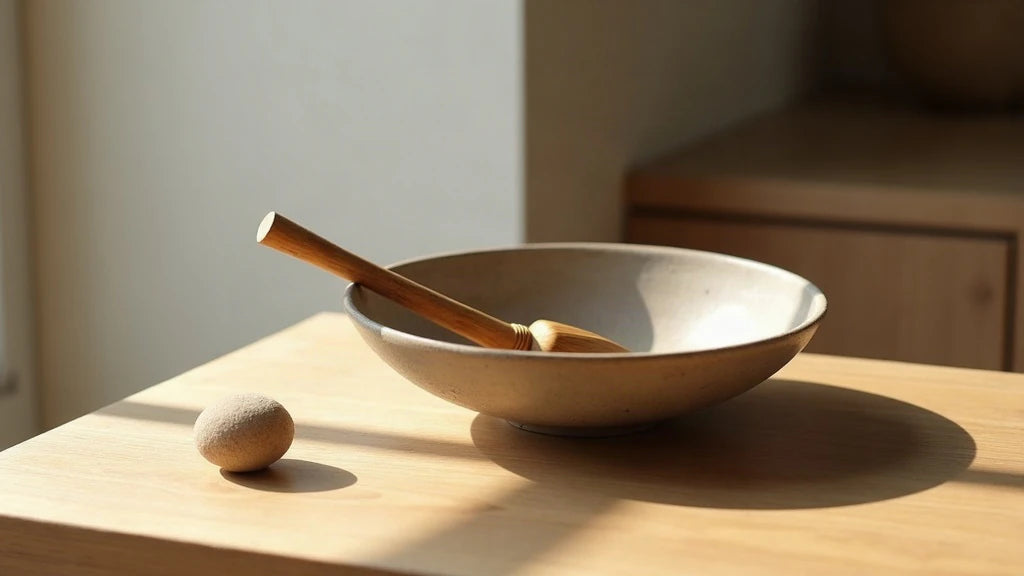

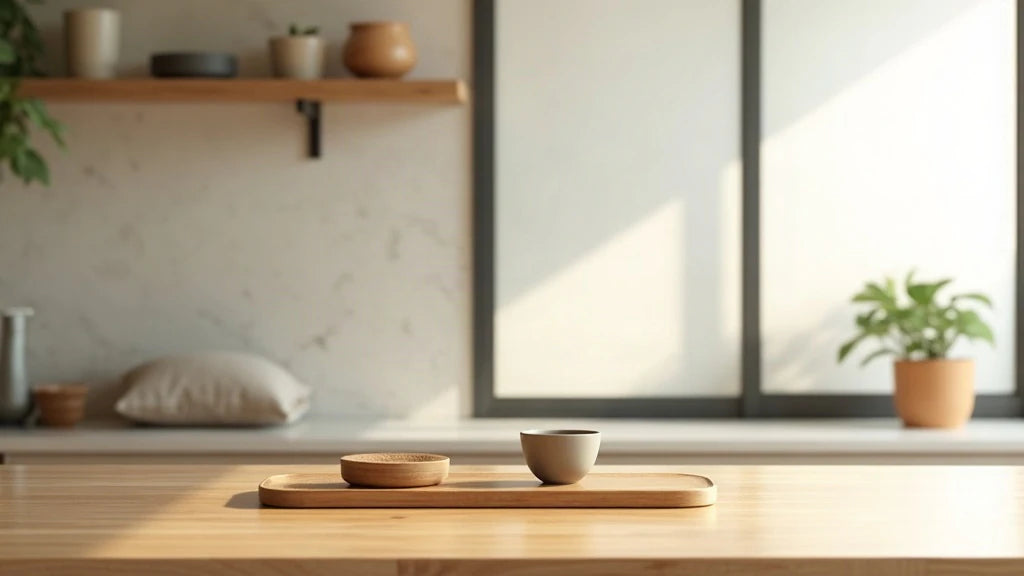
Open a photo of a japandi kitchen and look at what sits on the counter. Usually three things, not thirty. That restraint is easy to admire and surprisingly easy to get wrong once you are shopping from a screen. Buying affordable japandi kitchen decor online works when you check four things before adding to cart: the actual material named on the page (stoneware, bamboo, rattan, solid wood, not "wood effect"), the real dimensions in centimetres against your counter or shelf, whether colour and glaze vary because the piece is handmade, and the care instructions. Start with one anchor piece you will touch every day, a ceramic cup, a tray, a tea box, then add slowly instead of buying a full set at once. Read the shipping and returns pages before checkout so lead times never surprise you.
In short
- Trust product pages that name the material and firing, not vague words like "natural finish" or "wood look".
- Measure your counter, shelf depth and cabinet height before ordering trays, stools or organisers.
- Glaze pooling, colour shifts and slight size differences are normal on handmade japandi kitchen pieces, not defects.
- Build a coherent cart of four items maximum: cup, tray, rattan organiser, stool. Fewer, better choices.
What makes kitchen decor truly japandi?
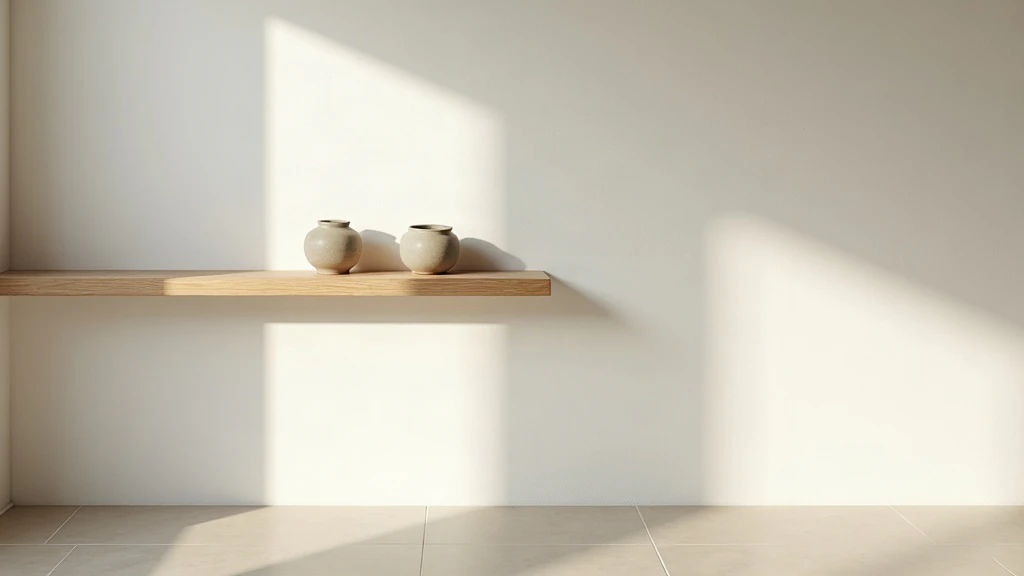
Japandi is the meeting point between Japanese wabi-sabi (an eye that values the worn, the irregular, the quiet) and Scandinavian restraint. In a kitchen, that means few objects, raw or matte surfaces, and warm neutral colours that let daylight do the work.
Japandi kitchen decor vs generic minimalism
Generic minimalism removes texture. Japandi keeps it. A white acrylic canister and a pale stoneware jar hold the same rice, but only one shows a fingerprint of the maker in its rim. Five things to check on a product photo:
- The surface catches light softly instead of reflecting it. Matte finishes read japandi, glossy ones rarely do.
- The silhouette is simple with one small irregularity: a slightly off-round rim, an uneven foot, a visible throwing line.
- The colour sits in earth tones: clay, oatmeal, ash, smoke, indigo, warm grey.
- The edges are soft rather than machine-sharp, and joins are visible instead of hidden.
- The styling photo has empty space around the object. Crowded shots sell a mood, not a piece.
Materials that read japandi: clay, wood, rattan, linen
Four families cover almost everything you need. Clay for cups, plates and jars. Wood for boards, trays and stools, ideally solid oak, ash or bamboo. Rattan and woven cane for baskets and organisers, because the weave adds shadow without adding weight. Linen for cloths, runners and napkins, since it creases honestly and softens with every wash.
Mixing all four in one kitchen is the point. Wood warms clay. Rattan lightens wood. Linen keeps the whole thing from feeling hard.
How to read a japandi kitchen decor product page
Most disappointing orders come from a page that never actually said what it was selling. An honest listing names the material, the firing or finish, the full dimensions in cm, the weight or capacity, and how to clean the piece. If two of those five are missing, ask before you order.
Material words that hide MDF or plastic
Some phrasing is designed to sound tactile while committing to nothing. "Wood effect" and "oak finish" usually mean printed MDF or laminate. "Ceramic-look" and "stone-look" mean resin or melamine. "Natural fibre" without a species name can be paper cord or plastic rattan. What you want to read instead: fired stoneware, glazed porcelain, solid oak, natural rattan, 100% linen.
| What the page says | What it often means | Ask for |
|---|---|---|
| Wood effect, oak finish | Printed MDF or laminate over board | Species and "solid" or "veneer over solid" |
| Ceramic-look, stone-look | Resin, melamine or coated plastic | Stoneware, porcelain, earthenware |
| Natural fibre weave | Paper cord or synthetic rattan | Natural rattan, cane, bamboo |
Dimensions, weight and capacity: what to measure first
Measure three things in your own kitchen before browsing. Shelf depth, because most open shelving sits between 15 and 25 cm and a wide tray will overhang. Height under the wall cabinet, because tall jars are the classic mistake. Counter overhang and stool seat height, since a comfortable gap between seat and counter is roughly 25 to 30 cm.
Then check capacity, not just size. A cup listed at 8 cm diameter can hold anything from a small espresso to a full mug depending on its wall thickness. Weight matters too: a light stool is easy to move, a heavy one stays put under a child.
Care and food-safety details worth checking
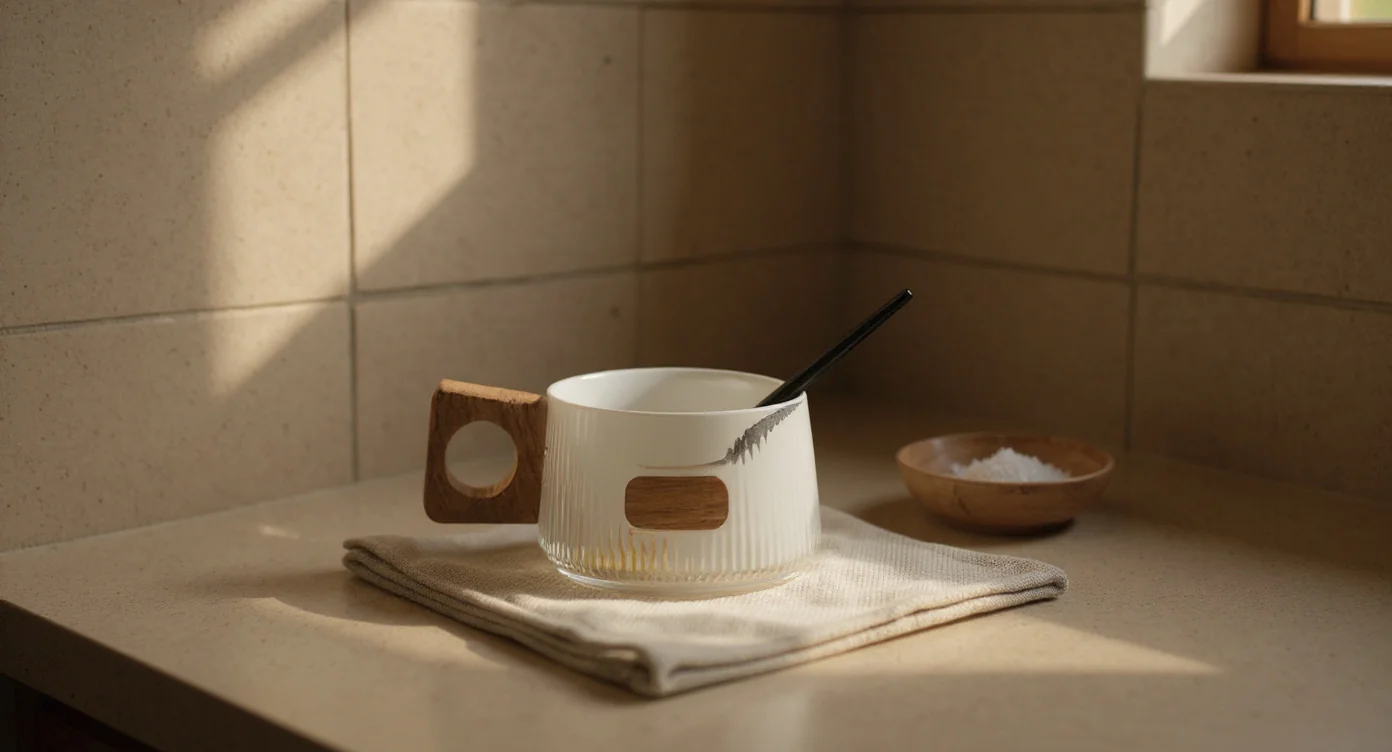
A good page tells you whether the glaze is food-safe, whether the piece is dishwasher and microwave friendly, and how to treat raw or oiled wood. Unglazed clay bases can scratch a counter, so a page that mentions sanding the foot is written by someone who has held the object. For a ceramic example, the Japanese Wabi Sabi Cup documents the clay body, the diameter and height, and notes that glaze shade shifts from cup to cup.
Handmade japandi pieces: variation or defect?
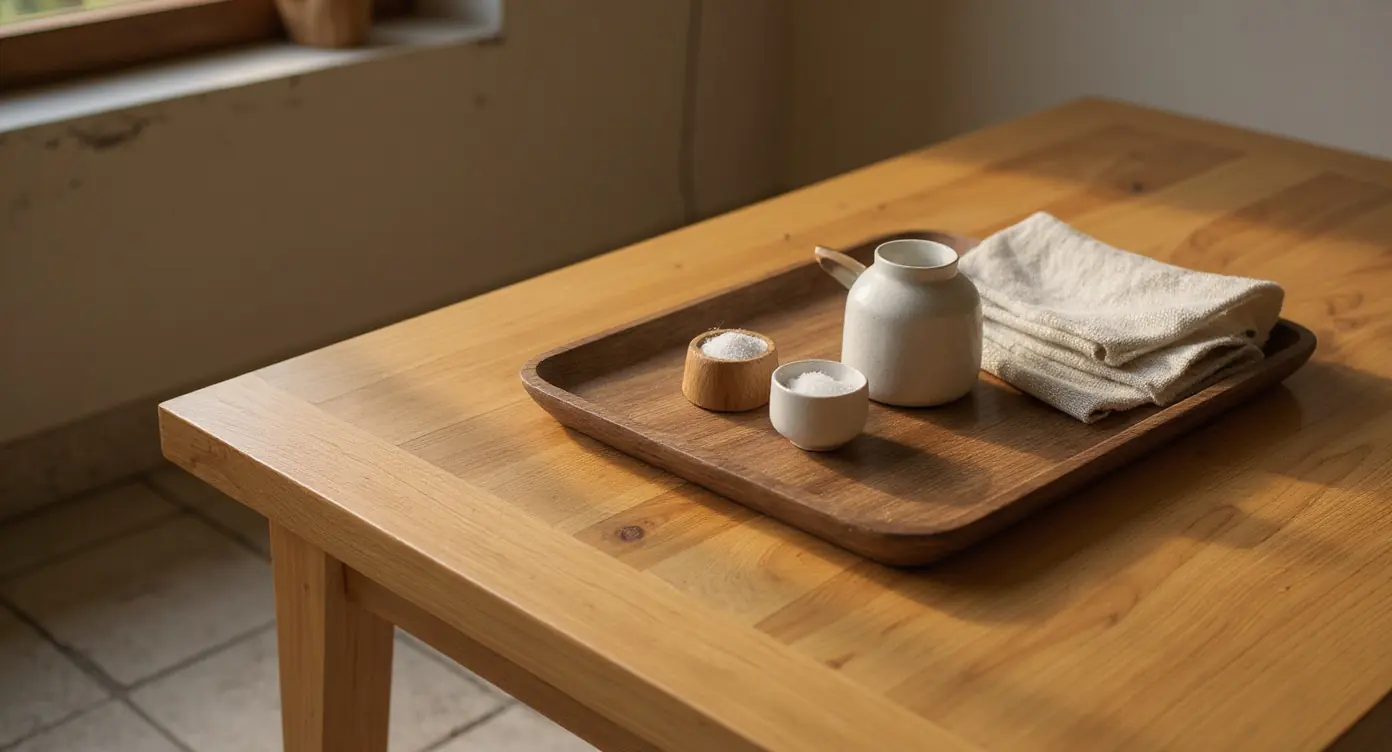
This is the fear that stops most online carts. Something arrives slightly darker, slightly narrower or slightly uneven, and you wonder whether you were shortchanged. Almost always you were not. Handwork carries evidence of the hand, and that evidence is why the piece looks warm on your shelf instead of anonymous.

Glaze pooling and colour shifts on ceramic cups
Normal handmade variation includes glaze pooling darker in recesses, a rim that is not perfectly round, tiny iron speckles from the clay body, faint throwing rings inside a bowl, and a 2 to 5 mm difference in height between two cups of the same model. On wood, expect knots, grain shift and colour that deepens with light. On rattan, expect slight differences in weave tension and tone.
Real defects are different and easy to name: a crack through the wall, a chip on the rim, a base that rocks on a flat table, a splinter or split in a stool leg. Each piece passes three checks in the workshop before packing.
When to contact the shop instead
Contact us if the piece does not stand level, if you find a through crack or sharp edge, or if the size falls outside the range given on the page. Photograph it on a flat surface in daylight, next to a ruler if size is the issue. Keep the packaging until you are sure.
Building an affordable japandi kitchen decor cart online
A japandi kitchen does not need a set. It needs four objects that each do a job and share a colour temperature. Start with pieces you touch daily, because the ones you handle age most beautifully.
The four-piece starter: cup, tray, rattan organiser, stool
Buy in this order. The cup first, since it is the smallest commitment and tells you whether you like the maker's clay and glaze in your own light. Then the tray, which corrals oil, salt and a small jug into one visual block and instantly clears a counter. I use a Wabi Sabi Tray beside the hob, and it is the piece I recommend most often to people who say their kitchen feels cluttered.

| Piece | Role in the kitchen | Material to look for | Buy order |
|---|---|---|---|
| Ceramic cup | Daily ritual, tea and coffee | Glazed stoneware, matte or semi-matte | 1 |
| Tray | Groups small objects, clears the counter | Solid wood or bamboo | 2 |
| Rattan organiser | Hides tea, cloths, cutlery on open shelving | Natural rattan or cane | 3 |
| Stool | Extra seat, plant stand, step | Solid oak or ash, oiled | 4 |
Where to spend and where to keep it simple
Spend on what carries weight or touches your mouth: the stool and the ceramics. A wobbly stool is useless and a poorly glazed cup disappoints every morning. Keep it simple on the basket and the linen cloths, where honest natural material at a modest level performs perfectly. Leave one shelf empty. Negative space is a purchase decision too.

Shipping, returns and lead times for japandi kitchenware
Fragile work travels well when packed properly. Ceramics should arrive double-boxed, each piece wrapped individually with padding between the object and every wall, so nothing touches nothing. Wood and rattan need less padding but do need corner protection.
How fragile ceramics are packed
We pack cups and bowls separately rather than nesting them, because two glazed surfaces rubbing in transit chips rims. If a box arrives visibly crushed, photograph it before opening. That single photo makes any claim straightforward.
Where to find our FAQ and shipping policy
Delivery windows vary by destination and by piece. Our FAQ page and shipping policy page hold the current lead time, the returns window and the procedure for damaged parcels. Read them before checkout. It takes two minutes and removes the only real uncertainty in ordering handmade work online.
FAQ: buying japandi kitchen decor online
The questions I am asked most often, answered briefly.
Where can I buy affordable japandi kitchen decor online?
Look for shops that name materials precisely, publish full dimensions, and explain handmade variation before you ask. One well-made stoneware cup used daily costs less over five years than three sets you replace. Start with one piece from a maker whose page you trust.
Is handmade japandi ceramic dishwasher safe?
Some pieces are and some are not, so check the listing rather than assuming. Fully glazed, high-fired stoneware is often dishwasher safe, while unglazed exteriors, matte reactive surfaces and any piece with gold or raw clay areas prefer hand washing. When a page is silent, wash by hand.
How many decor pieces does a small japandi kitchen need?
Four visible objects on the counter is plenty, and three is often better. Group them on a tray so they read as one shape instead of four. Everything else lives behind a door or inside a basket.
What if the colour I receive differs from the photo?
Screens shift warm and cool, and reactive glazes shift from firing to firing, so a small difference in tone is expected on handmade ceramics. Set the piece in daylight for a day before deciding. If the difference is significant rather than subtle, contact us with a daylight photo.
Do japandi wood and rattan work together in one kitchen?
Yes, and they are more forgiving than most people fear. Keep the undertones in the same family, warm with warm, and let the difference sit in texture rather than colour. A woven basket on an oak shelf, with a linen cloth folded beside it, is the whole idea in miniature.
If you want to see how these pieces sit together in one room, our Wabi Sabi Kitchen collection is arranged the way I would build a counter: one cup, one tray, one basket, and space around them.
Explore the Wabi Sabi Kitchen collection
Browse the Wabi Sabi Kitchen collection for ceramic cups, trays, tea storage and natural-material pieces with full dimensions and care details on every page.
Browse the collection →