
The first time I served sencha in a matcha bowl, the tea was lukewarm before the second sip. The bowl was beautiful. It was simply the wrong shape for the job. The confusion behind yunomi vs chawan is exactly that: two vessels from the same family, made for two different gestures. A yunomi is the everyday Japanese tea cup: tall, handleless, held with both hands, filled with hot leaf tea like sencha or hojicha. A chawan is a wide, low bowl made to whisk matcha in, with enough room for a chasen to move and enough weight to sit steady in the palm. One is for drinking. The other is for making and drinking in the same vessel.
In short
- A yunomi is taller than it is wide and holds roughly 150 to 250 ml of leaf tea.
- A chawan is wider than it is tall so a bamboo whisk can move freely through matcha.
- Neither has a handle: the wall thickness and the way you cradle the cup manage the heat.
- A yunomi suits daily tea; a chawan is used when you actually prepare matcha, at home or in ceremony.
Yunomi vs chawan: what actually separates them
The difference is not size, it is proportion. Change the ratio between height and width and you change what the vessel can do. A tall cup traps heat and lifts aroma toward the nose. A wide bowl loses heat quickly, but it gives a whisk room to work.
The yunomi, a cup for drinking brewed tea
A yunomi is roughly cylindrical, often slightly narrower at the base than at the rim, and taller than it is wide. Typical height sits around 7 to 9 cm, with a capacity near 150 to 250 ml. It receives tea that has already been brewed in a kyusu, the side-handled Japanese teapot.
The chawan, a bowl for whisking matcha
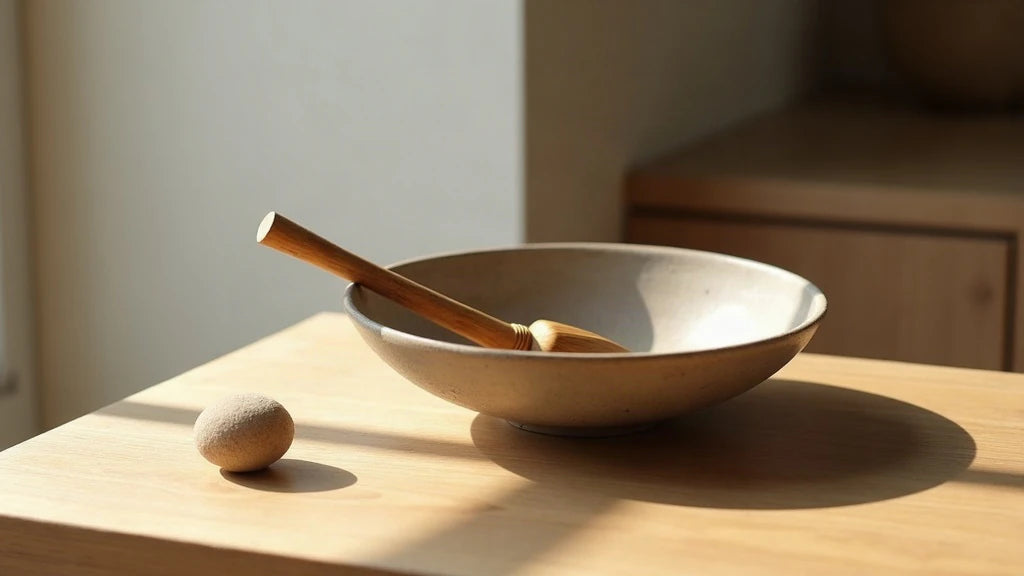
A chawan is a working tool. Diameter usually runs 11 to 13 cm, height 6 to 8 cm, and total volume often 400 ml or more, though you fill it barely a third. That empty space is not waste. It is the room the whisk needs, and the margin that keeps froth from spilling over the rim.
Yunomi vs chawan side by side: size, shape, use
| Feature | Yunomi | Chawan |
|---|---|---|
| Proportion | Height greater than width | Width greater than height |
| Typical size | 7 to 9 cm tall, 7 to 8 cm wide | 6 to 8 cm tall, 11 to 13 cm wide |
| Capacity | 150 to 250 ml, filled most of the way | 400 ml and up, filled about one third |
| Tea served | Sencha, hojicha, genmaicha, bancha | Whisked matcha, thin or thick |
| Moment | Morning, desk, after dinner, guests | When you prepare matcha yourself |
| Common material | Stoneware, porcelain, glazed clay | Thicker stoneware, textured glaze |
So no, a chawan is not a large yunomi. Scale a yunomi up and you get a tall vase-like cup where a whisk hits the walls. Scale a chawan down and you get a shallow dish that cools in a minute. The two shapes are not on the same scale at all.
How a yunomi feels in the hand
A yunomi is judged by touch before taste. The rim meets the lip, the palm reads the temperature, and the weight tells you whether the cup was made by hand or pressed in a mould. A slightly oval rim or a thumbprint in the glaze matter more than uniformity.
Yunomi height, capacity and wall thickness
The tall form slows heat loss, because less surface is exposed to the air. It also channels aroma upward, so the grassy note of sencha reaches you before the liquid does. Wall thickness sets the comfortable serving temperature: thin porcelain walls transmit heat fast and suit tea poured around 70 to 80 °C, while thicker stoneware forgives hotter water.
Why a yunomi has no handle
A handleless tea cup is not an oversight. Japanese leaf teas, sencha above all, are brewed below boiling. A cup you cannot hold is a signal that the water was too hot for the leaf. You cradle it: one hand under the foot, the other resting against the wall. The gesture slows you down.
Stoneware, porcelain or glazed yunomi
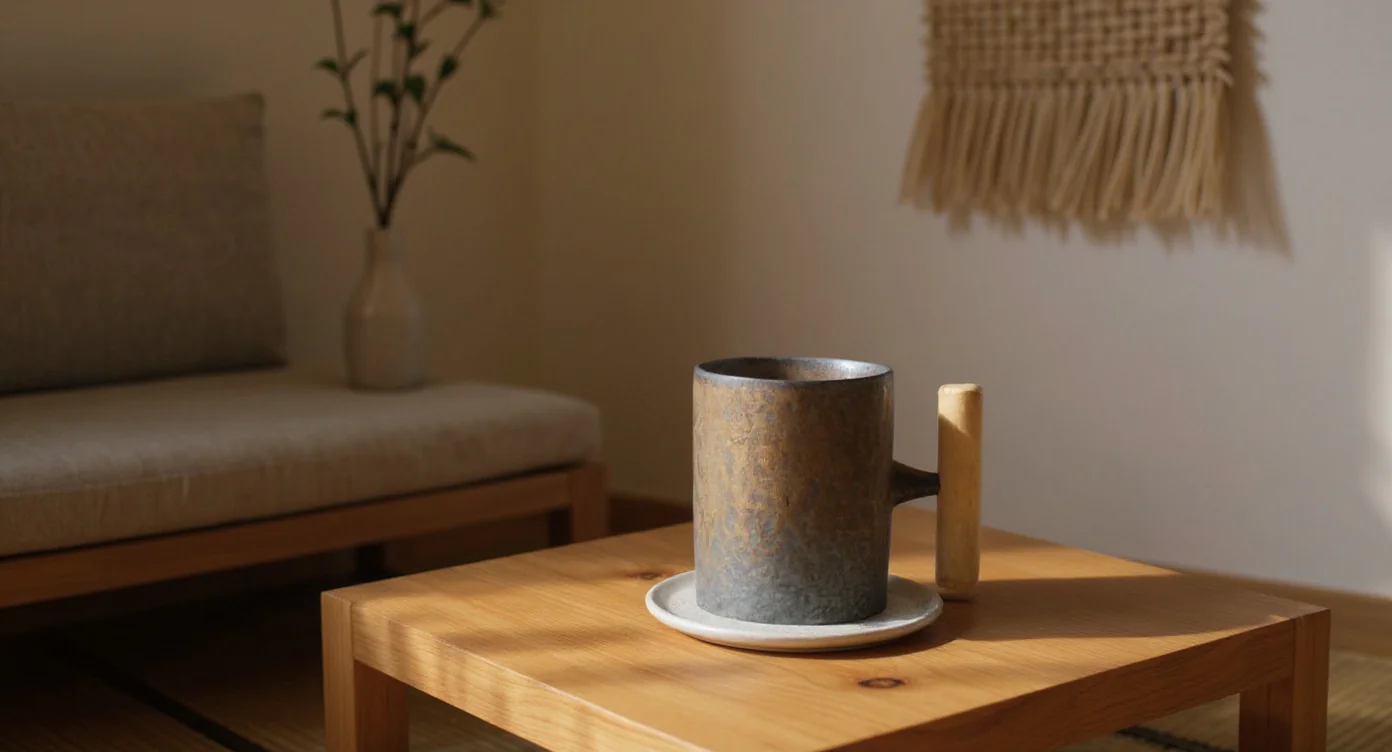
The choice between stoneware and porcelain is a choice of touch. Stoneware is matte, slightly sandy under the thumb, warm in colour, and it hides small stains as it ages. Porcelain is cool, smooth, and shows the true colour of the liquor against a pale inside. For daily use, I reach for a simple ceramic yunomi without a handle, because its matte body stays comfortable to hold and it looks calm sitting beside a wooden board.
Why a chawan is a bowl and not a big cup
Matcha is not steeped, it is suspended. The powder has to be broken apart and lifted into the water, and that only happens if a whisk can sweep across a curved floor without catching. The bowl's geometry does the work your wrist cannot.

The chawan interior and the chasen whisk
A chasen bamboo whisk is around 6 cm wide at the tines. It needs a floor that is broad and gently rounded, with no sharp junction between base and wall. Flat-bottomed kitchen bowls trap powder in the corner. Very glossy glazes let the whisk skate instead of grip, and steep narrow bowls can damage delicate bamboo tines.
The kodai foot ring and how a chawan sits in the palm
The kodai foot ring is the small raised ring turned into the base. It lifts the hot bowl off the table, keeps the underside cool enough for your fingers, and gives a clear grip when you rotate the bowl before drinking. On hand-thrown pieces the kodai is often left unglazed, so you can read the bare clay and the mark of the trimming tool.

Which tea goes in a yunomi, which in a chawan
Match the vessel to how the tea is made, not to how much you want to drink. Anything infused in a pot goes into a cup. Anything whisked goes into a bowl.
Sencha, hojicha and genmaicha in a yunomi
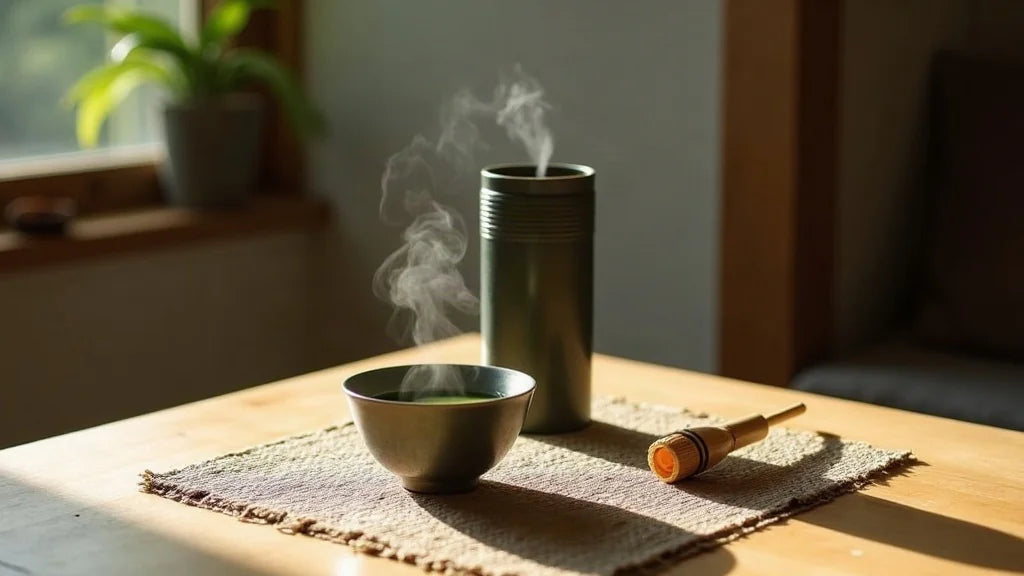
Sencha likes water around 70 to 80 °C and short infusions, and good leaf gives two or three steeps. Hojicha, roasted until brown, and genmaicha, blended with toasted rice, both take hotter water, closer to 90 °C. Pour 100 to 150 ml at a time rather than filling to the brim, so the tea stays hot from first sip to last.
Usucha and koicha in a chawan
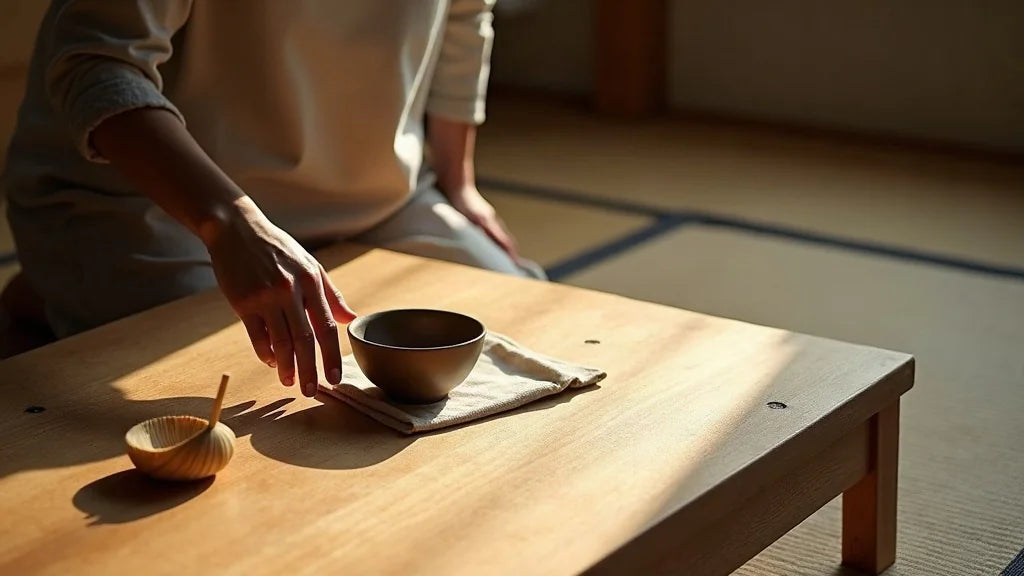
Whisked matcha comes in two strengths. Usucha and koicha, thin tea and thick tea, use roughly the same bowl but very different ratios: about 2 g of matcha to 60 or 70 ml of water for thin tea, and about twice the powder with half the water for thick tea. Water sits around 70 to 80 °C in both cases. Boiling water scorches the powder and turns it bitter.
Water temperature and how much you pour
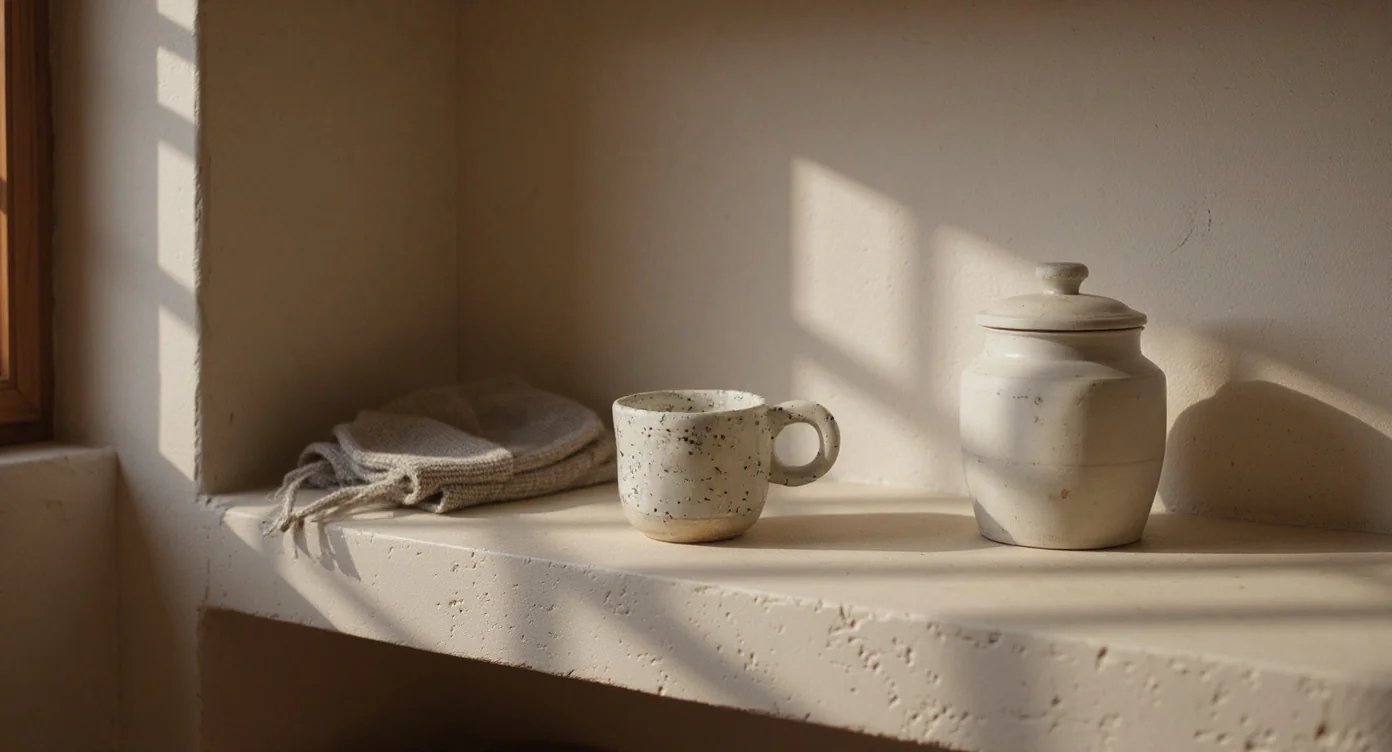
A wide bowl loses heat in minutes, which suits matcha because you drink it in three or four mouthfuls. That is the practical answer to why the two shapes are not interchangeable. For evening hojicha, I set out a slightly flared wabi sabi cup, because the open rim releases the roasted aroma and brings the tea down to drinking temperature on its own.
Yunomi, mug or Western teacup: what changes daily
A mug is more practical for a 400 ml desk tea, and a yunomi is better for tea you actually taste. Both can live on the same shelf. What changes is the ritual around them and the temperature of the brew.

The handle question: mug vs yunomi
A handle lets you carry near-boiling liquid and hold the cup one-handed while you work. A yunomi asks for both hands and a slightly cooler brew. If you drink black tea or coffee at 95 °C, keep a handled mug. If you drink Japanese green tea, the handleless form is better matched to the temperature.
Saucers, capacity and refills
| Yunomi | Western teacup | Mug | |
|---|---|---|---|
| Capacity | 150 to 250 ml | 150 to 200 ml | 300 to 400 ml |
| Handle | None | Small handle | Full handle |
| Saucer | No, sometimes a wooden coaster | Yes, usually matched | No |
| Refills | Frequent, part of the ritual | Occasional | Rare |
Choosing a Japanese tea cup for a small kitchen shelf
On a shallow shelf, cups without handles win space: they sit closer together and read as a quiet row rather than a cluster of hooks. Four cups in two sizes cover almost every situation. Fewer, better choices, with room left around them. The Japanese tea cups collection gathers the straight and flared forms discussed here.
Yunomi and chawan questions people ask
Short answers to the questions that come up most often.
What is the difference between a chawan and a yunomi tea cup?
A yunomi is a tall handleless cup for brewed leaf tea, filled from a teapot. A chawan is a wide, low bowl in which matcha powder is whisked with hot water and then drunk. The yunomi holds tea; the chawan is where the tea is made.
Can any bowl be used as a chawan?
You can whisk matcha in any bowl of similar size. A rice bowl or soup bowl with a rounded interior and a slightly textured glaze works reasonably well. Flat bottoms and very glossy surfaces make frothing harder and can damage a bamboo whisk.
What is the difference between a yunomi and a regular teacup?
Proportion, handle and temperature. A yunomi is taller than it is wide, has no handle and no saucer, and is designed for tea brewed below boiling. A Western teacup is wider and shallower, comes with a handle and usually a saucer, and is built for near-boiling black tea.
Is Yunomi Life a legit tea shop?
Yunomi.life is an established online retailer of Japanese tea, based in Japan. It is a separate business, with no connection to this shop. Check current shipping terms and reviews directly on their site before ordering.
How much tea does a yunomi hold?
Most yunomi hold somewhere between 150 and 250 ml when full. In practice you pour less, around 100 to 150 ml, so the tea stays hot and you refill from the pot two or three times.
If you are choosing your first cup, start with the shape you will reach for every morning. The handleless cups I keep on my own shelf are gathered there, straight forms and flared ones, so you can compare them calmly before deciding.
Explore the Japanese Tea Cups collection
See the handleless cups, wider bowls and everyday mugs we keep in the Japanese Tea Cups collection.
Browse the collection →