Read more
Matcha Set features and benefits
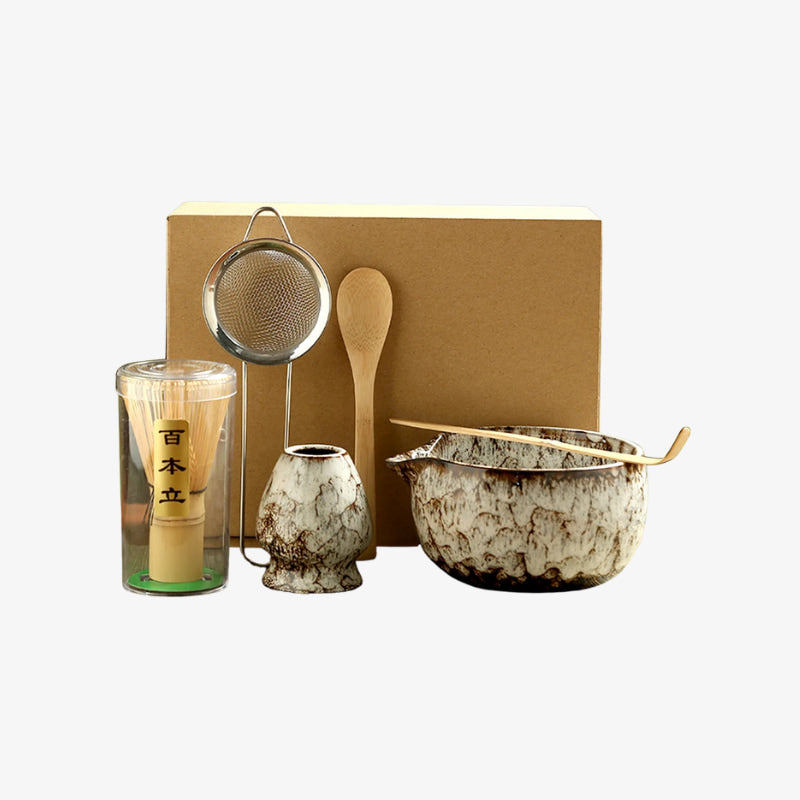
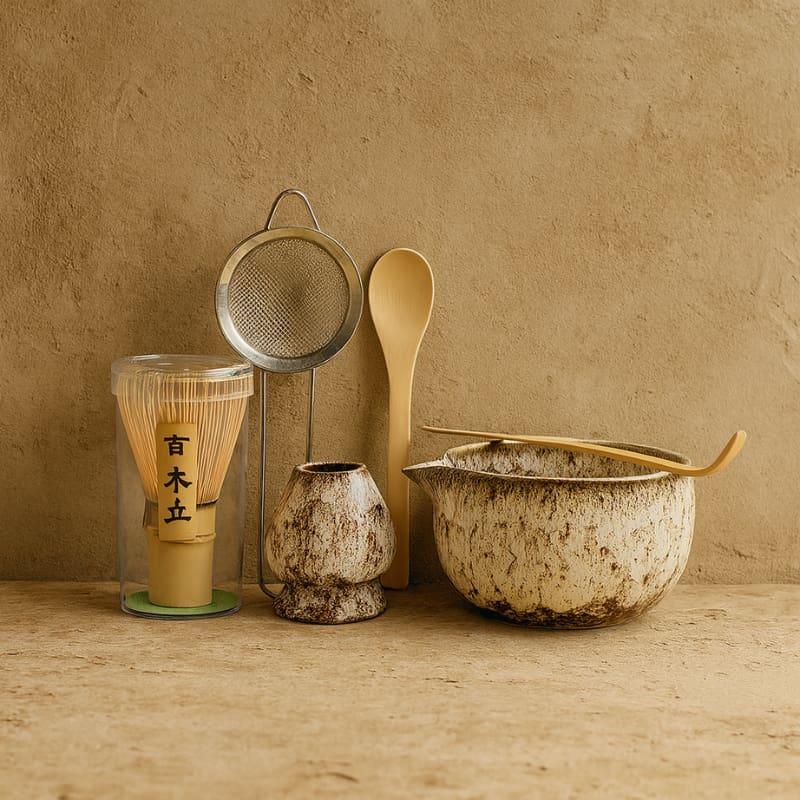
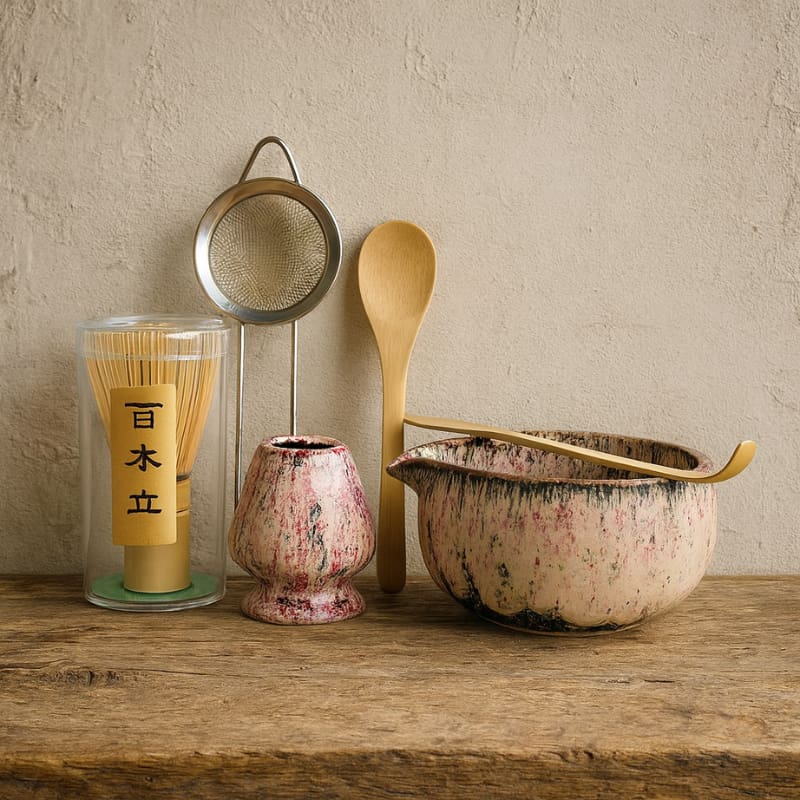
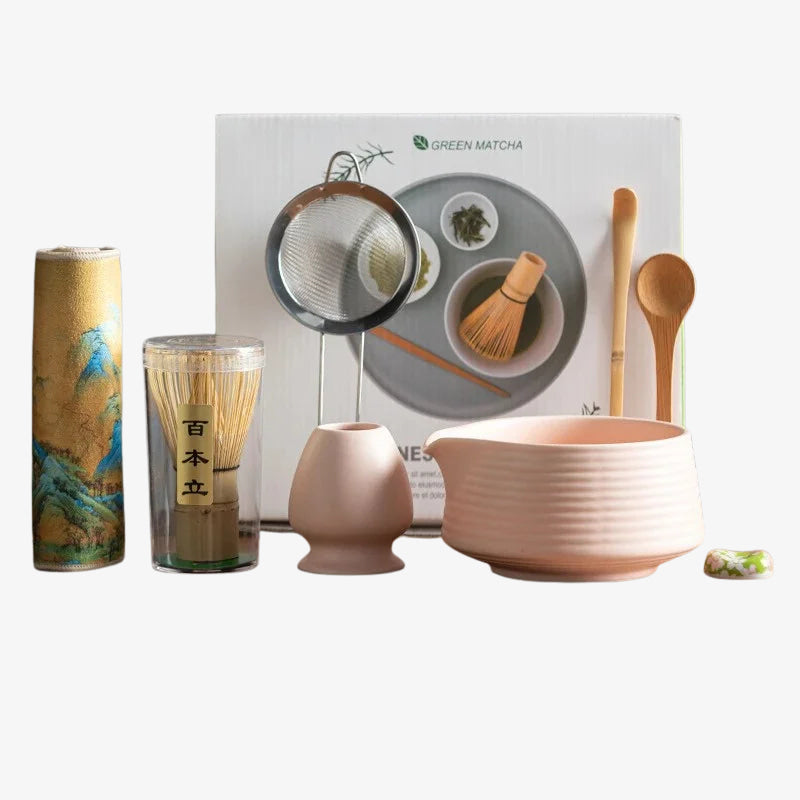
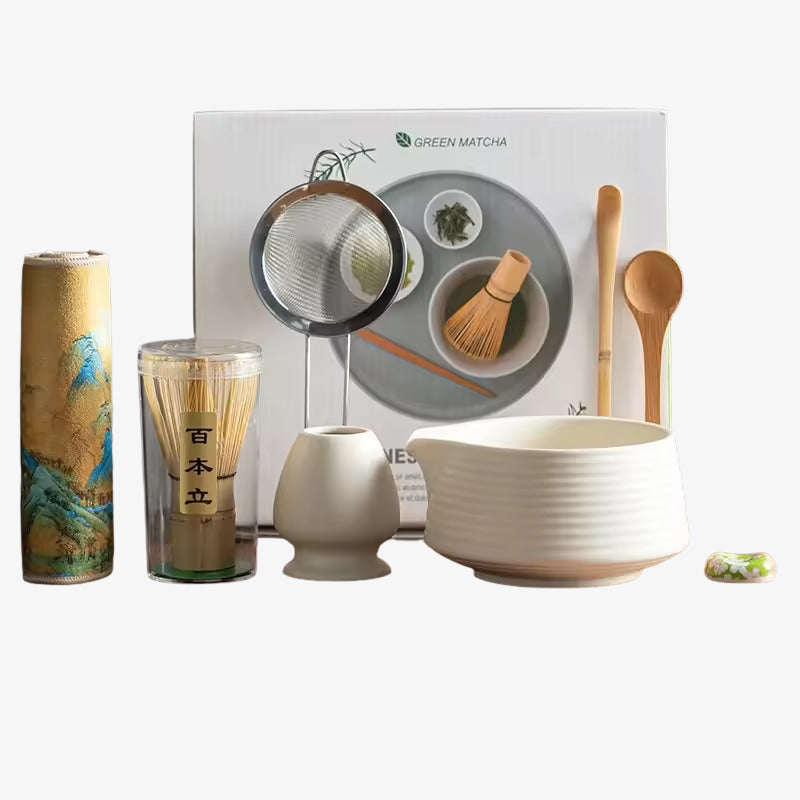
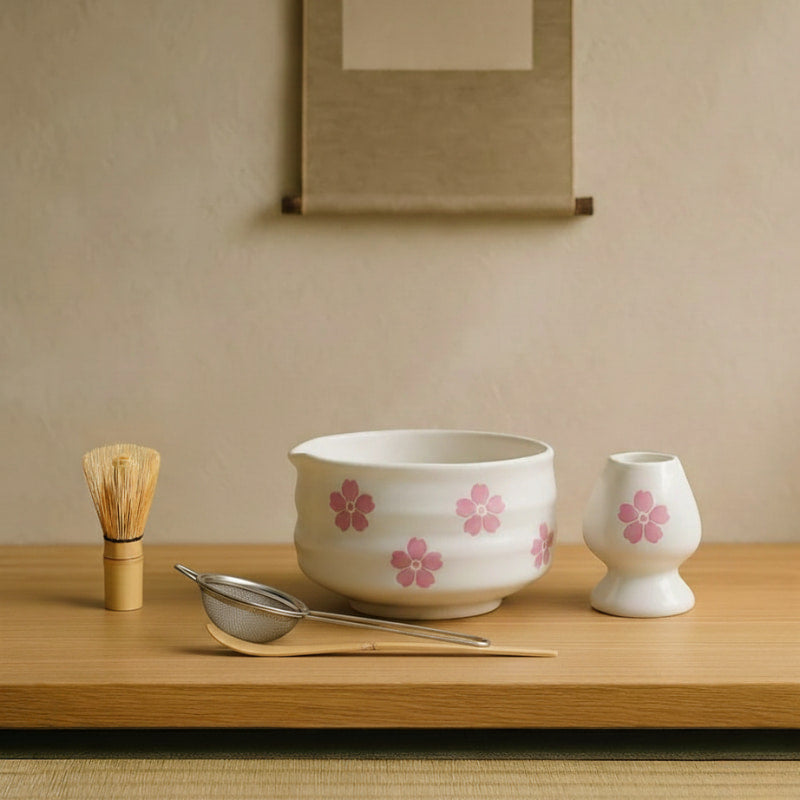
Japanese matcha whisk sits at the heart of the ritual because it turns powder and water into a smooth, vivid foam. Fine bamboo tines move quickly without scratching the bowl, so the wrist stays relaxed and the texture turns creamy rather than gritty. A good whisk opens the tea’s aroma fast, which helps the palate catch sweetness and umami at the same time. When the bowl fits the palm and the rim feels soft, the whole motion becomes intuitive and the body settles into a comfortable pace.
Balanced bowls and cups shape the tasting experience before the first sip. A wide chawan supports whisking, while smaller vessels finish the presentation with quiet elegance. Well proportioned Japanese tea cups keep heat gentle on the lip and highlight color against a neutral glaze. When the cup’s weight matches the thickness of the rim, the hand relaxes and the tea reads round and clean, not sharp or thin.
Good powder sets the tone for everything that follows. Fresh color, clean fragrance, and smooth texture signal a quality base for the ritual. When you sift the tea and whisk with intention, Japanese matcha green tea powder dissolves evenly and gives a bright, lingering finish. The right powder supports both quick morning bowls and slow weekend sessions, and it pairs with ceramics that keep the spotlight on flavor rather than on decoration.
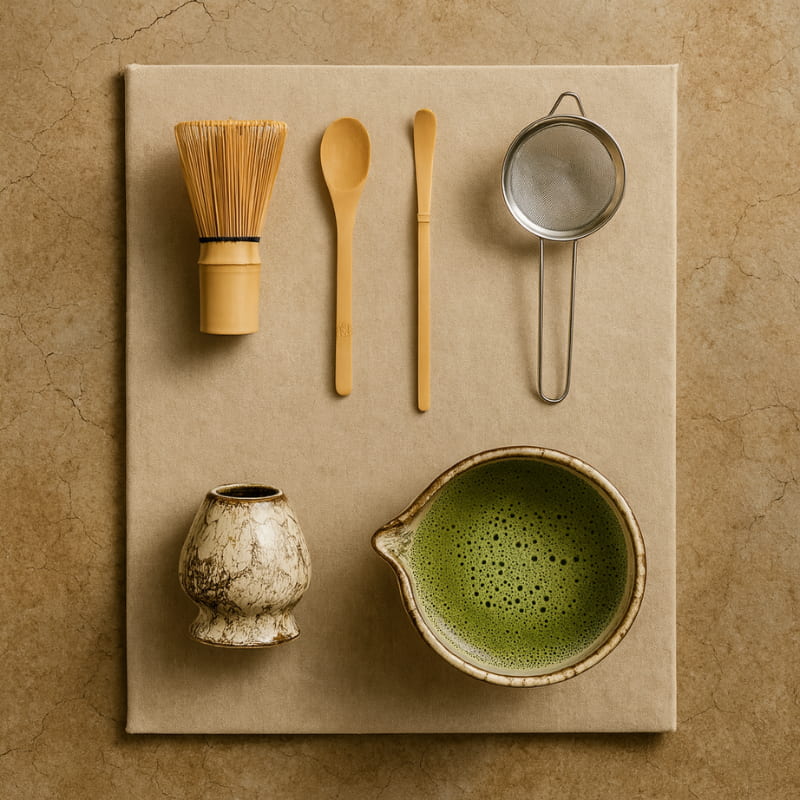
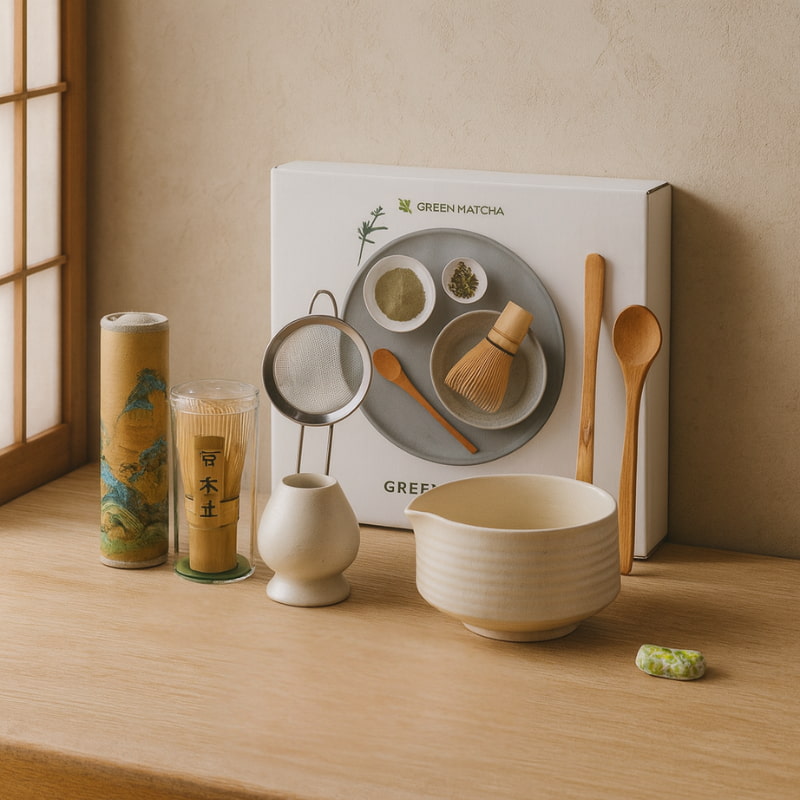
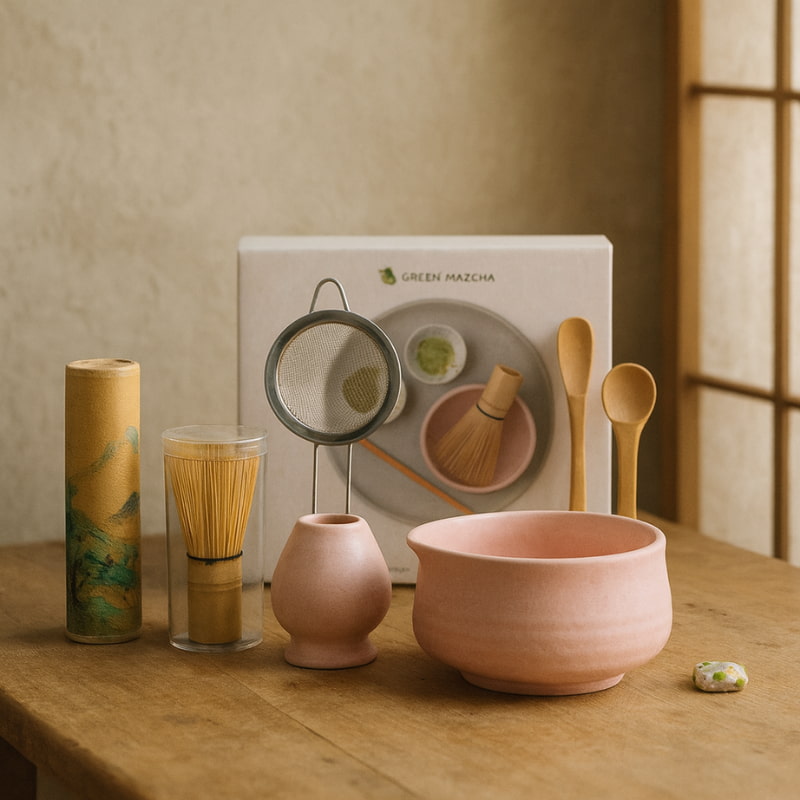
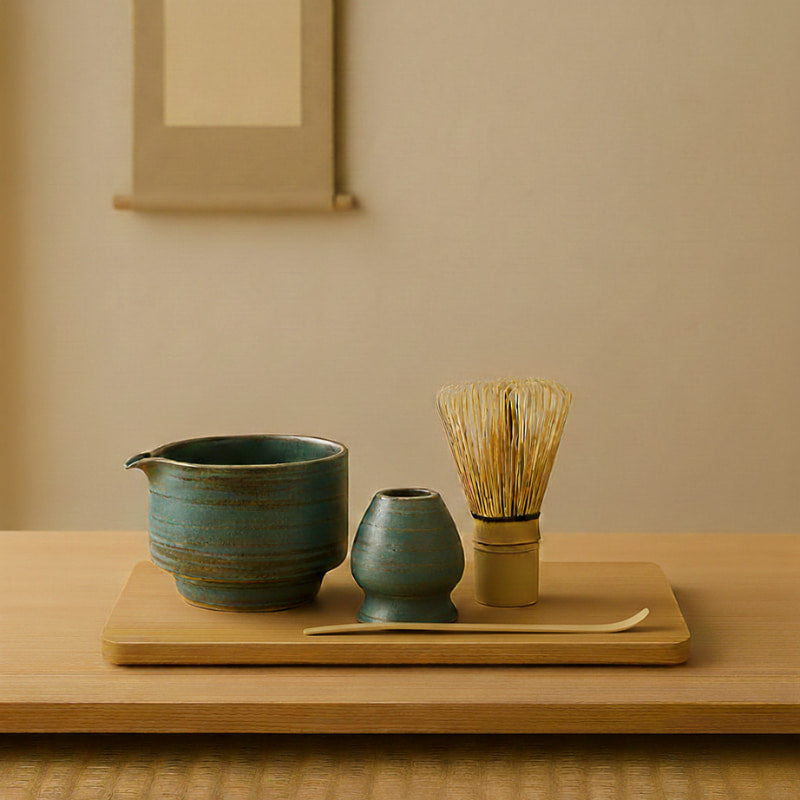
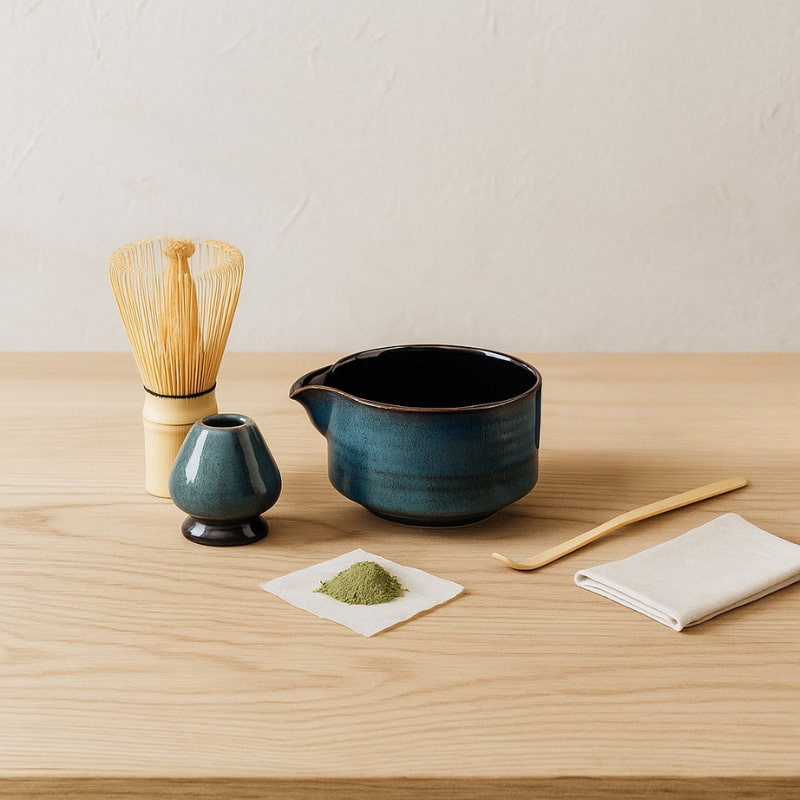
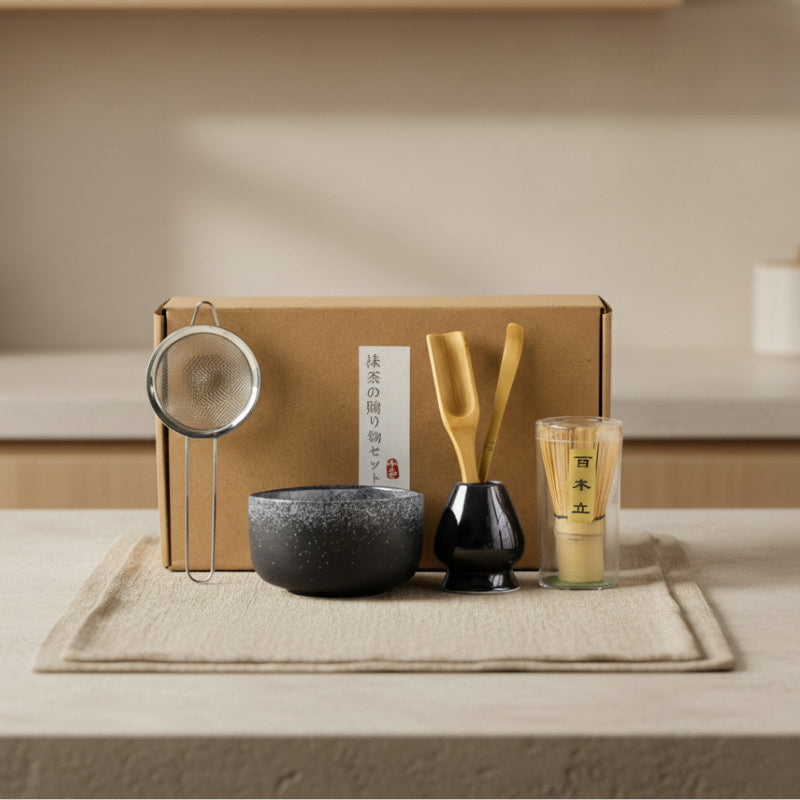
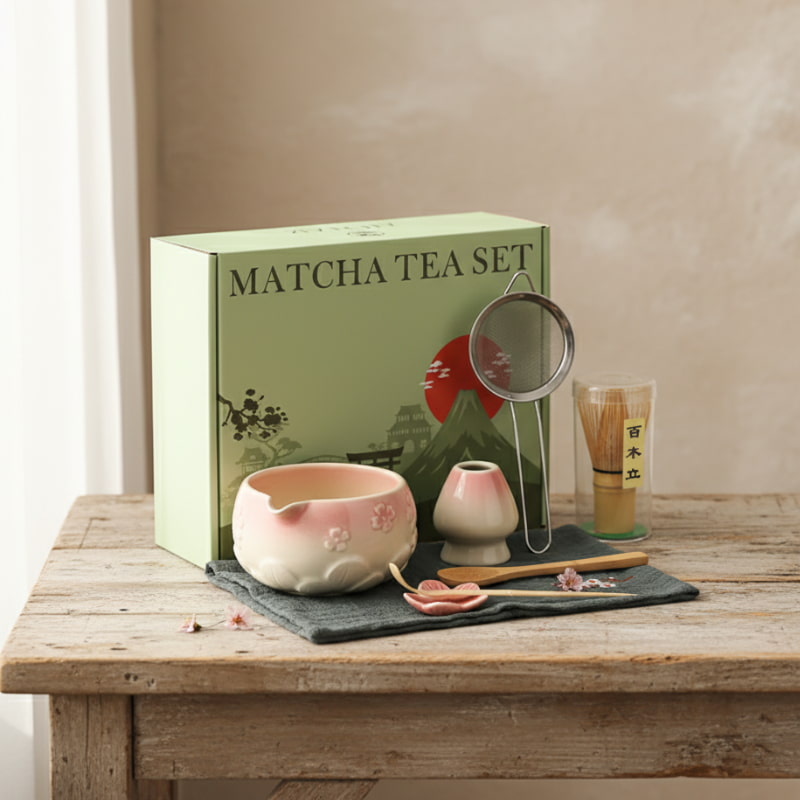
A complete kit simplifies the path from shelf to sip. A tray corrals bowl, whisk, scoop, and cloth so setup takes seconds and cleanup feels easy. A well chosen Japanese matcha set also keeps scale consistent, which matters for comfort and control. The scoop reaches the pouch without spilling, the whisk clears the rim with room to move, and the bowl sits steady during vigorous motions. When tools work together, the ritual stays smooth even on busy days.
Texture and finish do more than look good; they guide grip, flow, and heat. A matte interior helps the foam appear clearly, while a gentle exterior sheen resists fingerprints. The whisk rests on a holder so the tines keep their shape, and the scoop wipes clean without staining. With the right balance between tactile warmth and practical durability, the Matcha Set earns a permanent place on a counter or a sideboard rather than hiding in a drawer.
How to choose the right Matcha Set ?
Start with the bowl and whisk, then match the rest. If you value fast mornings and consistent results, prioritize proven proportions and sturdy materials. The best japanese matcha set aligns bowl diameter with whisk size so the tines move freely. A form that sits low in the hand invites a stable wrist and an easy speed, and a slightly curved base helps air blend in without splashing.
Consider grade and purpose before you pick the powder. For quiet sessions with focused aroma, seek balance and depth rather than only brightness. If you prefer formal preparation and slow, concentrated sips, a kit that supports japanese ceremonial matcha suits the moment. The same bowl and whisk can handle both daily bowls and special occasions, but a refined scoop and a cloth for wiping the rim add calm precision when the gathering calls for it.
Think about how many people share the ritual. A couple of bowls and a second whisk keep the flow steady during visits or family tea time. A coherent japanese matcha tea set also helps hosts move confidently between preparation and serving because each tool has a clear job. Trays and low stands turn any table or counter into a temporary tea station, and the whole setup returns to the shelf in one motion.
Match tools to the style you enjoy most. If you love short, intense bowls, choose a shape with a slightly taller wall and a whisk with a firm bloom. If you lean toward lighter, airy foam, a wider bowl invites faster motions and more microbubbles. A practical Japanese matcha set keeps options open by pairing a versatile whisk with a friendly bowl profile that handles both textures well.
Plan for storage and travel if you move often. A whisk stand protects the tines between sessions, a lidded container guards aroma, and a soft cloth prevents scuffs on glaze. A compact tray and pouch transform the kit into a neat set for matcha that fits a studio kitchen, a work desk, or a weekend bag without losing order or charm.
Matcha Set use and care tips
Prepare your space before you pour. Lay out bowl, whisk, scoop, and cloth, then warm the bowl with hot water and empty it. This quick step helps texture turn silky and keeps temperature steady as you whisk. When the setup sits close at hand, the body moves without rush and the foam forms smoothly. A calm, centered area lets the Matcha Set shine and keeps attention on the aroma rising from the bowl.
Work the whisk with a light but decisive hand. Start slow to combine powder and water, then pick up speed with small, quick movements near the surface to build a fine foam. Keep the wrist flexible and avoid scraping the bottom so the tines stay intact. For a thick, concentrated bowl, knead gently until the surface turns glossy rather than frothy. You guide texture by feel and sound, and the bowl responds when proportions and tools align.
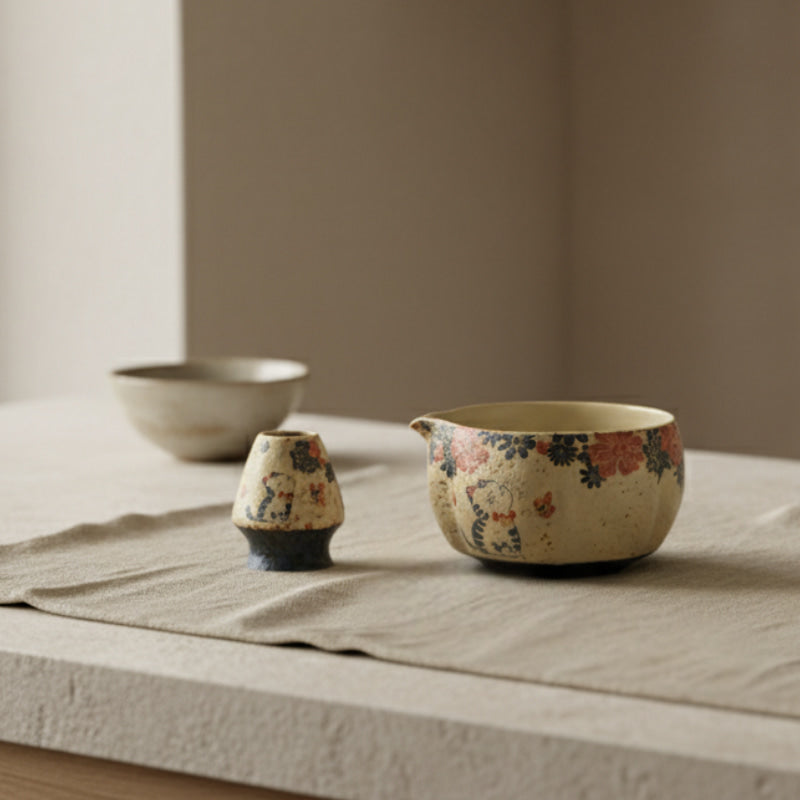
Use the right cup for the moment. After whisking, some hosts prefer to serve directly in the chawan, others pour a small portion into complementary vessels. Balanced forms and neutral glazes help color and aroma lead. A compact set of Japanese matcha set cups offers an easy way to share a tasting without breaking the flow. When the cup meets the lip softly, the mind relaxes and flavor opens with clarity.
Keep your tools ready with simple habits. Rinse the whisk under warm water right after use, shake off droplets, and let it dry on a holder to maintain its bloom. Wipe the scoop clean and store it dry. Avoid detergents on bamboo so the aroma stays neutral. These small steps take minutes and extend the life of the kit, which protects both performance and appearance over years of steady use.
Clean ceramics with care and celebrate gentle wear. Rinse bowls and cups soon after service and dry with a soft cloth. Surface marks and subtle changes in tone record a life of good sessions rather than damage. If you host often, keep an extra whisk on hand so you rotate tools and give each one time to dry completely. Regular, mindful care keeps the Matcha Set as reliable as the routine itself.
Organize a dedicated spot at home. A low tray on a sideboard or a shelf near natural light turns preparation into a beautiful scene. Place the bowl center, whisk and stand to the side, and a small jar or caddy within reach. A neat layout saves time and invites practice, which improves texture, aroma, and focus with every session. When the kit sits ready, the ritual asks very little and gives a lot back in return.
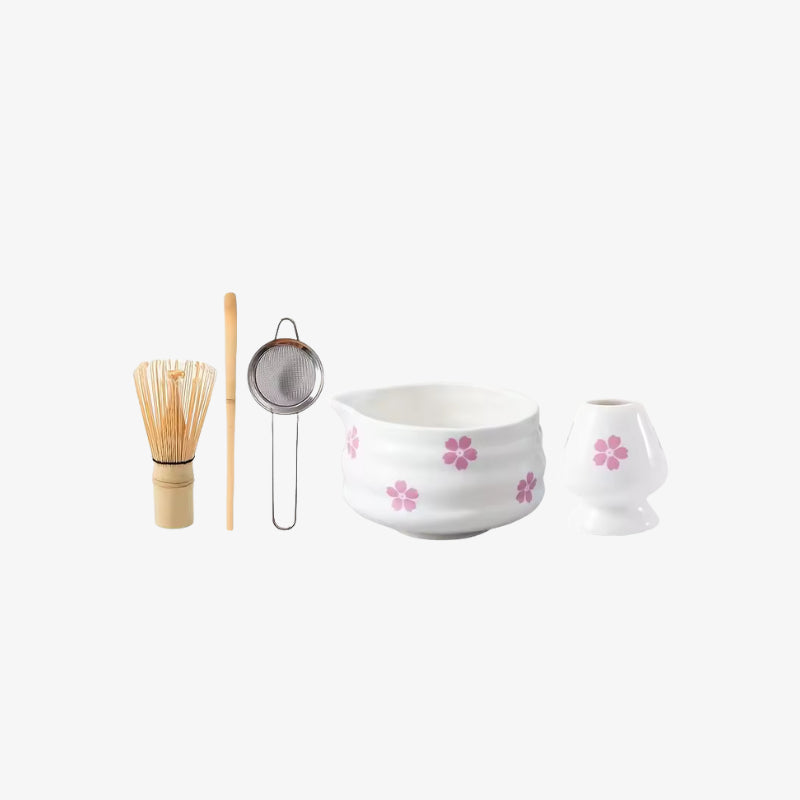
Explore forms beyond the basics once you build confidence. A cooling pitcher helps temper water, a fine sifter removes clumps, and a scoop with a gentle curve measures cleanly. When you add pieces with intention, the routine stays simple and the quality of the bowl rises. The collection grows with your taste rather than with impulse, and the Matcha Set remains coherent from the first step to the last sip.
Pair the tea with quiet food and meaningful pauses. A small bite like a soft sweet or a piece of fruit frames the flavor and resets the palate. Sit near a window or a plant, lower the lights in the evening, and breathe between sips. The ritual works because it brings attention to the present. Good tools make that attention effortless, and the set becomes part of daily life, not a task on a list.
Refresh the setup with the seasons. In cool months, choose heavier bowls and deeper colors; in warm months, pick lighter shapes and paler glazes. Swap a cloth or tray to match the mood of the room. This gentle rotation keeps energy bright without creating clutter and treats the Matcha Set like a living companion to the home rather than a static display.
Share the practice and keep it simple. Teach a friend or a guest how to whisk, pour, and enjoy the first sip. Offer a small tip, like resting the bowl in the palm or lifting the whisk just under the surface to build the right foam. People remember how the room felt and how the tea tasted, not the rules. A thoughtful set anchors that feeling and invites it back whenever you need a calm minute.