

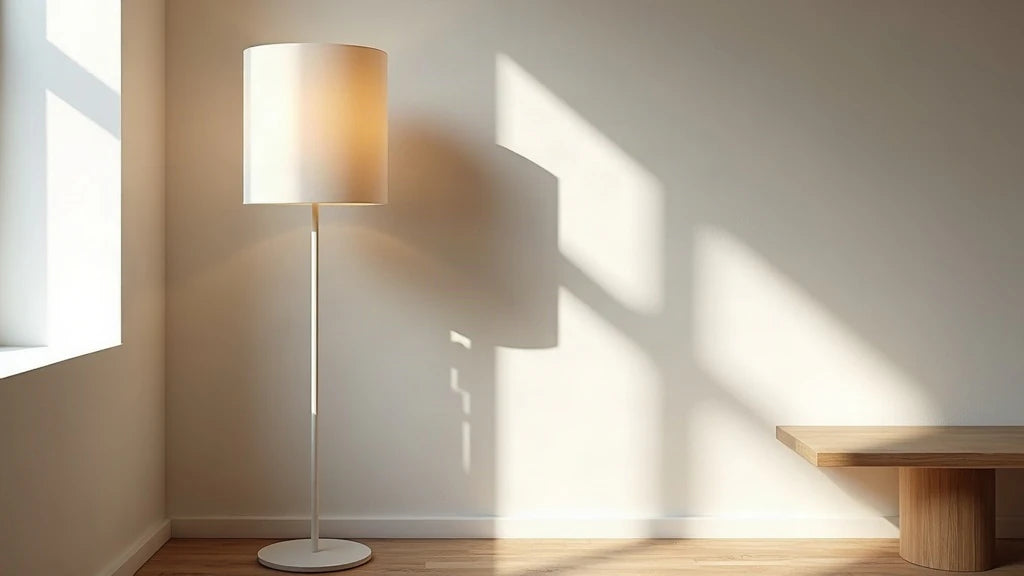
I once lit a bedroom with two lamps in the same corner, one week apart. The fabric one drew a bright cone on the floor and left the walls dark. The washi one turned the whole corner into a soft glow, and the room felt twice as quiet. That difference is the real answer to paper floor lamp vs fabric floor lamp which is better: a washi paper floor lamp is the better choice when you want light that fills a room evenly and keeps shadows soft, in bedrooms, reading corners and quiet living rooms. A fabric floor lamp wins when the lamp sits in a busy, high-traffic spot or has to survive kids, pets and frequent moves, because the shade takes knocks and can be wiped or vacuumed. In short: paper for atmosphere and even diffusion, fabric for durability and directed, warmer light.
Key points
- Paper shades glow across their whole surface, so the light reads as ambient; fabric shades throw more light up and down, which suits task corners.
- A washi shade is fragile at the edges but repairable; a fabric shade resists impact yet slowly sags, stretches and yellows.
- Care is opposite: paper is dusted dry and never wiped, fabric can be vacuumed and spot-cleaned.
- Match the bulb to the shade, since a low-heat warm bulb protects paper and keeps fabric colour from shifting.
Washi paper floor lamp vs fabric: the light they cast
The two shades do not dim or brighten a room differently so much as they change the shape of the light. Paper turns the shade itself into the light source. Fabric, especially when lined, keeps the light inside and pushes it out of the top and bottom openings. Everything else, the mood, the shadows, the way your linen cushions read at night, follows from that one structural difference.
Why a washi paper floor lamp softens shadows
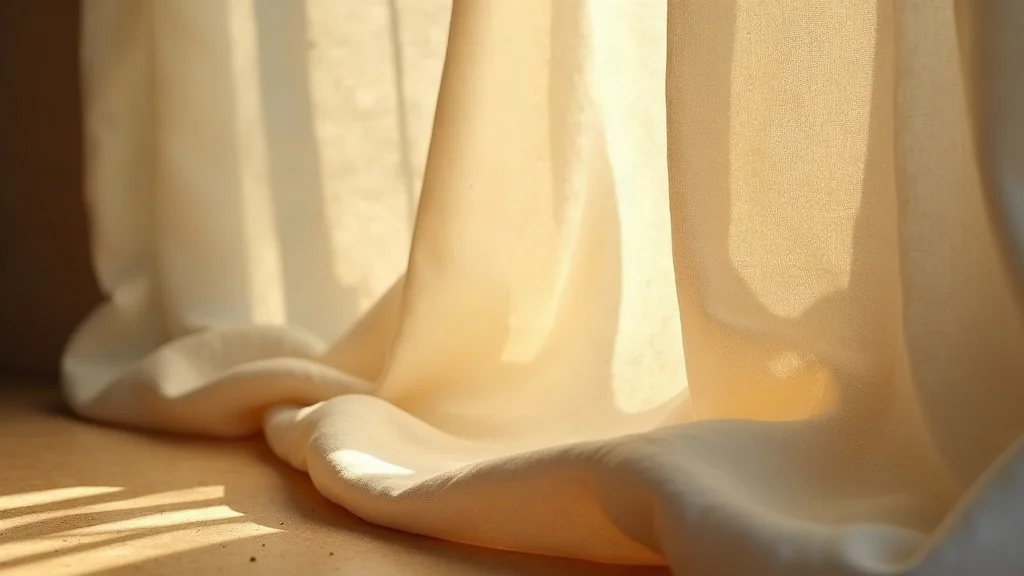
Washi paper is a Japanese paper made from long plant fibres, usually kozo or mitsumata, which is why it stays translucent without feeling thin. Light passes through the entire surface rather than escaping from two openings. In lighting terms that makes the lamp a large source instead of a small one, and large sources produce soft shadow edges. Stand next to a washi floor lamp and look at your own hand on the wall: the outline blurs rather than cutting. This is the same principle as a shoji screen, the paper and timber panel used in traditional Japanese rooms to turn daylight into an even wash. In a room with lime-washed walls, pale oak and clay vessels, that soft fall of light is what lets the textures read instead of flattening them.
Placement changes how much of that softness you actually get. I keep a paper shade at least 25 to 30 cm off the wall, because paper lamps light sideways and a wall too close bounces a hot patch back at you. I also watch the height of the bottom edge against a seated eye line, roughly 110 to 130 cm from the floor for a sofa or a bed. Below that line you see the glow, not the bulb. Above it, you catch the socket and the illusion breaks. The minimalist floor lamp I keep recommending is the clearest example of that wide-source effect: a tall paper cylinder with a low bottom edge, which spreads light across a corner instead of spotlighting the floor.
How a fabric lamp shade warms and narrows the beam
A fabric shade behaves like a container. Most are backed with a white or off-white lining, and that lining blocks the sides almost completely. The light exits downward in a cone and upward onto the ceiling, and the shade's own surface stays comparatively dark. The result is a defined pool, which is why fabric is the traditional choice beside an armchair where you actually read. A linen lamp shade without a lining sits between the two worlds: it glows a little through the weave, though never as evenly as paper, and the weave texture shows as faint stripes in the light.
Fabric also tints what it passes. An unbleached linen or a warm cream lining pulls the colour of the light slightly amber, which flatters wood and skin tones but can muddy cool greys and blue-greens. Natural washi runs closer to neutral with a faint warm cast, so wall colours stay truer. If you have spent time choosing a specific plaster shade for your walls, that matters more than people expect. And in a room where the lamp is the only light after dark, the fabric cone leaves the upper corners in shadow, which can make a small room feel smaller.
Paper vs fabric floor lamp: light at a glance
The table below is the comparison I sketch for clients when they cannot decide. Read it by priority rather than top to bottom: pick the row that matters most in your room and let that choose the material.
How long does a paper floor lamp last in real use?
With a warm, low-heat bulb and a position outside daily traffic, a well-made washi shade holds up for many years. In a bedroom or a reading corner I expect it to outlast the trends people worry about. In a hallway, behind a door, or next to a toddler's play mat, the honest answer is shorter, and it is almost never the paper that fails first. It is an edge, a corner, or a seam.

What actually damages a washi paper lamp shade
Paper shades rarely tear in the middle of a panel. The damage collects at the arrises, the folded or wired edges where the paper meets the frame, because that is where the material is under tension and where a passing hip or a vacuum head makes contact. The second cause is moisture: a damp cloth lifts the surface fibres, leaves a pale ring as it dries, and weakens the sizing that keeps the paper taut. The third is heat, from a bulb that is too powerful or sits too close to the paper, which dries the fibres and yellows them unevenly over a year or two. The fourth is simply the vacuum cleaner, which I have seen crack more shades than children ever have.
None of these are mysterious, which is the good news. Keep the lamp out of a doorway swing, keep water away from it, keep wattage modest, and lift the vacuum head rather than dragging it past the base. I move a paper lamp with two hands on the pole, never by the shade, and I lift it rather than sliding it across a rug, because a snagged foot is what tips a lamp into a wall. Those four habits cover nearly every failure I have been asked to repair.
How fabric floor lamp shades sag, stretch and yellow
Fabric fails more slowly and less visibly, which is why people assume it does not fail. The textile is stretched over a lampshade frame and held with adhesive or stitching, and over the years it relaxes. The shade develops a soft waviness at the lower rim, and the seam line starts to pull. Humidity accelerates it, so a fabric shade in a bathroom-adjacent bedroom or a kitchen corner loosens faster than one in a dry living room. Dust is the other slow enemy: fabric holds it in the weave, and once it is in there with a little cooking grease, a spot clean leaves a water mark instead of removing a stain.
Linings yellow too. White PVC or styrene linings go cream, then biscuit, and because the change is gradual you only notice when you compare the lamp to a new one. The light output drops with it, usually by more than people guess, and the colour of the light drifts warmer every year. A fabric shade therefore wins on impact resistance and loses on appearance over time. A paper shade is the reverse: more fragile on the day, more honest over the decade, since washi softens and ambers in a way that reads as wabi-sabi, the appreciation of things marked by age and use, rather than as damage.
Re-papering a paper lamp frame instead of replacing it
The idea that a paper lamp is disposable is the most common misunderstanding I meet. The value sits in the frame, the base and the wiring, not the skin. When a washi panel tears, the usual fix is a patch: a piece of thin Japanese paper, feathered at the edges and applied with a little wheat starch paste, which is the method used in book conservation. Done well, the patch becomes a faint shadow rather than a scar, and the shade keeps working for years. A full re-papering is a longer job but the same logic, and the lamp you end up with is the lamp you chose, not a replacement.
That is also why I look hardest at structure when I assess a paper lamp. In our own workshop checks, the frame and the seams are inspected three times before a lamp is packed, because a bent rib or a weak joint is the one fault that makes a shade unrepairable. A fabric shade, by contrast, is harder to recover: once the textile has relaxed on the frame, re-stretching it rarely gives back the crisp line, and most people replace the whole shade. So the material that looks fragile is the one you can keep, and the sturdy one is the one you tend to throw away.
Cleaning a paper lamp shade vs a fabric floor lamp
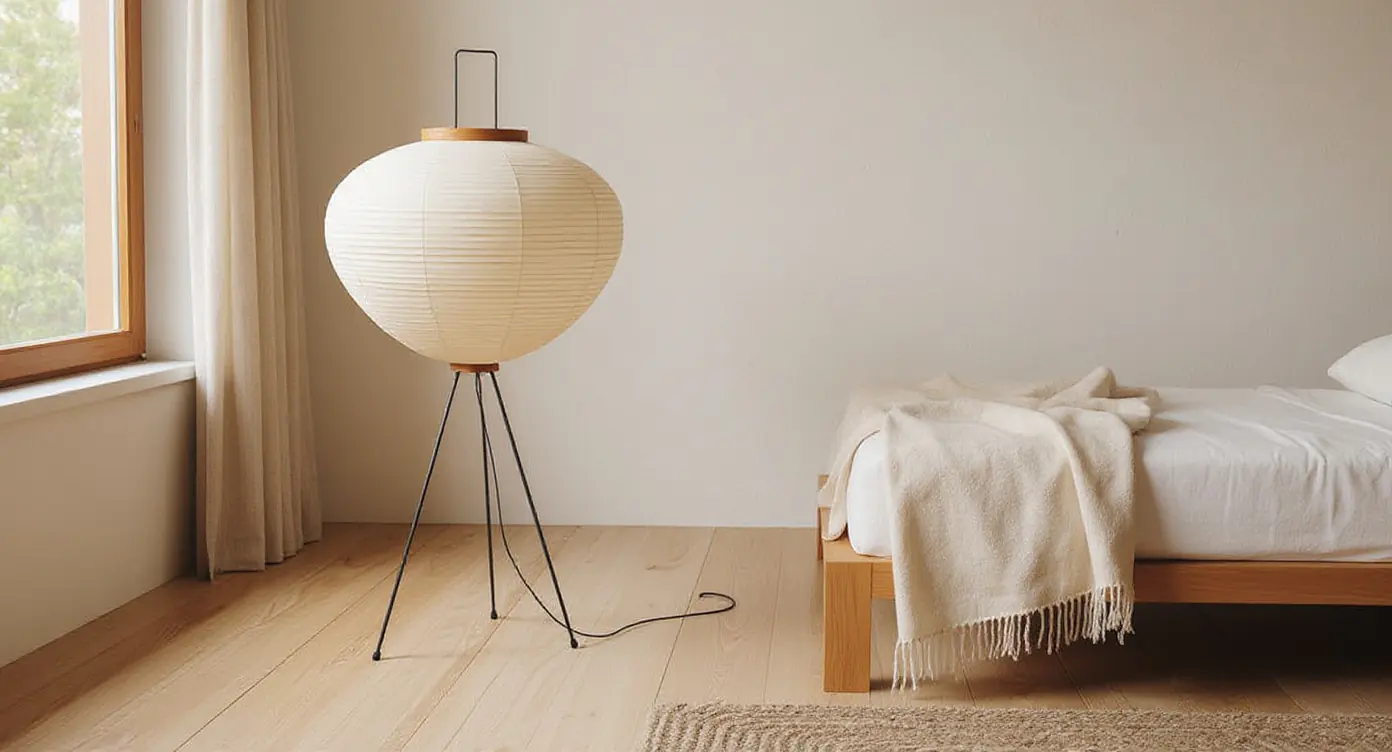
The two materials need opposite routines, and mixing them up is how most shades get ruined. Paper is cleaned dry, always. Fabric tolerates gentle suction and a careful spot clean. Both benefit far more from frequent light dusting than from occasional deep cleaning, because dust that has settled for a year is already bonded to the surface.
Dusting washi paper without water or sprays
Use a soft, dry brush, a clean make-up brush or a wide artist's brush works perfectly, and sweep in one direction, following the grain of the fibres rather than scrubbing in circles. Support the panel from behind with your other hand so the paper does not flex away from the brush. A dry feather duster is fine for the quick pass, and a soft lens blower handles the folded edges where a brush cannot reach. Work from the top down so the dust you lift falls away from the surfaces you have already done. Two minutes every few weeks is enough, and it is the single habit that keeps a washi shade looking right.
What never touches a paper shade: water, damp cloths, cleaning wipes, furniture spray, alcohol, and the brush head of a vacuum at full power. Each one either stains, lifts the fibres, or dissolves the sizing that keeps the panel taut. If something is spilled on a paper shade, blot with a dry tissue and leave it, because rubbing spreads the fibre damage and makes a small mark into a large one. A faint ring on washi settles into the material's character; a scrubbed patch does not.
Vacuuming and spot-cleaning a fabric shade
For fabric, start with the upholstery or brush attachment on the lowest suction setting, and keep the nozzle a few millimetres off the surface rather than pressed against it. Move with the weave, support the shade from inside with your hand so the frame takes no strain, and do the inside of the shade too, since that is where dust settles heaviest and where it dims the light most. For a mark, use a barely damp cloth with plain water, blot rather than rub, and feather outward from the edge of the stain so you do not leave a hard tide line. Let it dry fully with the lamp off before switching it back on.
Avoid soap and fabric sprays on a lined shade, because the liquid wicks between the textile and the lining and dries as a visible patch you cannot reach. Grease marks near a kitchen are the one case I do not try to rescue; replacing the shade on a good frame is a better outcome than a pale halo on the front panel. And if the shade has started to sag, go gentler still, as a relaxed textile tears at the seam under suction that would have been harmless when it was new.
The bulb that keeps a paper floor lamp cool
Heat is the quiet threat to paper, so the bulb choice is part of the lamp's lifespan. I use a warm LED at a color temperature 2700K, which is the warm white of a late-afternoon interior, and keep the output modest, roughly 400 to 800 lumens for an ambient floor lamp. LEDs run far cooler than halogen or incandescent at the same brightness, which is exactly what a paper shade needs, and they do not bake the fibres from the inside. Check the maximum wattage marked near the socket and stay under it, and leave clear air between the bulb and the paper rather than filling the shade with a large globe. The warm, low-heat E27 bulb I fit in my own paper lamps is the one I reach for, because the standard E27 socket fits nearly every floor lamp and the low heat output is what protects the washi.

Add a dimmer switch if you can, either in the lamp or as a plug-in unit, and buy a bulb marked dimmable. Dimming a paper shade is more useful than dimming a fabric one, because the paper's whole surface drops in brightness together and the room fades evenly instead of losing its pool of light. Lower output also means less heat, which extends the life of the paper. In practice I run a paper floor lamp at full output while reading and at a third in the evening, and the lamp does two different jobs without a second fitting.
Which floor lamp for a bedroom, lounge or reading nook?
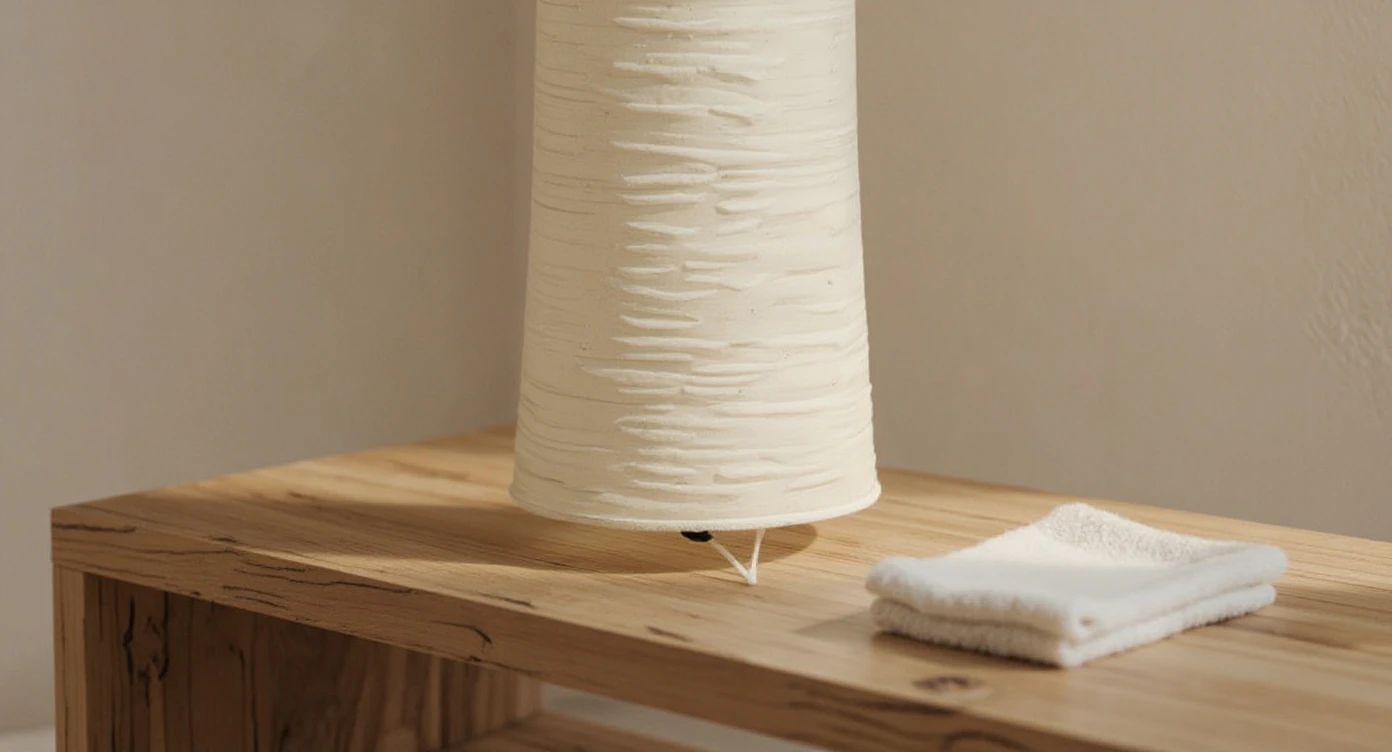
This is where the comparison stops being abstract. Decide what the room has to survive and what you want to feel in it, in that order. Traffic, children and pets point to fabric. Sleep, reading and calm point to paper. Most homes need one of each, in different corners.
A paper floor lamp beside the bed
In a bedroom the priority is light with no visible hot spot, because a bright point in your field of view keeps the eye working. Paper gives you that: the shade glows rather than aims, and the light settles on the walls and the bedding instead of on your face. Place the lamp just behind the line of the headboard, offset from the bed rather than level with your pillow, so the glow comes from slightly behind and to the side. Keep the bottom edge of the shade above the mattress line but below your seated eye line when you are sitting up in bed. The frequent mistake is pushing the lamp tight into the corner, where two walls bounce the light back and the soft effect collapses into a bright wedge.
A tall paper lamp also solves a problem small bedrooms have, which is that one bright ceiling fitting flattens everything. Replace it after dark with a single washi source and the room gains depth: the far wall stays dim, the near textures catch the light, and the eye has somewhere to rest. If you share the room, that offset placement matters even more, since a paper shade at the right height lights your book without washing over the other side of the bed. Keep the rest of the corner nearly empty, because diffused light needs negative space to read as calm rather than as clutter softly lit.
A fabric floor lamp in a busy family living room
A living room with children, a dog and a daily circulation path through it is the case where I recommend fabric without hesitation. The shade takes a knock from a thrown cushion and springs back. It survives a vacuum head, a chair leg and the week you rearrange the furniture. It can be vacuumed and spot-cleaned when a sticky hand lands on it, which paper cannot. And if the lamp lives next to the sofa where people actually read, the defined cone is genuinely more useful than an ambient wash. Put it behind and to the side of the seat, with the shade's lower rim at about shoulder height when seated, so the light falls on the page and not in anyone's eyes.
That said, a lounge usually has more than one corner, and the quiet one can still take paper. If you have a low sofa or a floor cushion arrangement, the height of the lamp matters more than the material: too short and the shade sits in your eye line, too tall and the glow lands on the ceiling. I use the taller japandi floor lamps for low seating when a client has a deep sofa or a reading corner on the floor, because the extra height puts the shade above a seated eye line and the light arrives from above rather than across. For ambient lighting in a shared room, two modest sources at different heights beat one bright one every time.

Reading corner: paper floor lamp at the right height
A reading corner is the one place where paper and fabric genuinely compete, and the deciding factor is how you read. For long sessions with small print, a fabric shade's focused pool puts more light on the page for the same bulb. For comfortable evening reading where you also want the room around you to feel soft, paper wins, because the contrast between page and surroundings is lower and the eye adjusts less. I choose paper in nearly every reading nook I style, then raise the output with a brighter dimmable bulb rather than switching material.
Height decides whether it works. Set the bottom edge of the shade roughly level with your shoulder when seated, and position the lamp just behind the chair's armrest, 20 to 30 cm out from the back of the seat. That puts light on the page without a shadow from your own head. Keep the lamp off the wall so the glow has room to spread, and leave the facing corner empty rather than filling it with a second object. The error I see most often is a lamp placed directly beside the chair at hip height, where the shade glares in your lower vision and the page stays dim.
Buying a paper floor lamp: what to check before you pay
The shade is the part you look at, and the part that fails is almost always underneath it. Judge a paper floor lamp by its base, its frame and its serviceability, because those decide whether you own it for a decade or a season. Here is the sequence I run through, in person or from a product page.
Checking the frame, base and weight of a floor lamp
Weight at the base is the first thing I check, since a tall lamp with a light foot tips, and a tipped paper shade is a repair job. Look for a base wide enough that the lamp does not rock when you nudge the pole, and a pole that feels rigid rather than springy. On the shade, the ribs should be evenly spaced and true, with the paper under consistent tension and no slack panels or puckering at the seams. A visible, accessible socket matters: you want to change a bulb without dismantling the shade, and you want to know the shade can be removed and replaced on the same frame. A foot switch on the cable saves reaching into the shade every evening, which is where most accidental damage happens.
Ask whether a replacement shade is available for the model, because that single answer tells you whether the lamp is designed to be kept. Check the cable length against the distance from your socket, as a taut cable across a walkway is the most common cause of a lamp going over. And look at how the pole meets the base: a threaded or bolted joint stays tight, while a pressed fit works loose and starts to wobble within a year or two.
Shade diameter, lamp height and ceiling height
Proportion is what separates a lamp that settles into a room from one that looks borrowed. Use the table below as a starting point, then adjust for your seating height rather than your floor area alone.
Two rules override the table. Keep at least 20 to 25 cm of clear air between the top of the shade and the ceiling, or the lamp feels wedged into the space. And check the bottom edge of the shade against your own seated eye line in the actual chair, because a lamp that is correct on paper and wrong by 10 cm will glare at you every evening. In a low-ceilinged room, a short floor lantern with a wide rice paper shade often works better than a conventional tall lamp, since it lights the lower half of the room and leaves the ceiling calm.
When a fabric floor lamp is the smarter buy
I sell and style paper lamps, and there are three situations where I still tell people to buy fabric. The first is a genuinely high-traffic position: a hallway, a spot beside a door that swings, or the end of a sofa that doubles as a thoroughfare for small children and animals. The second is a kitchen, dining corner or any room with cooking steam and airborne grease, where paper cannot be cleaned and fabric can. The third is frequent moving, whether that is a rental you change every year or a habit of rearranging rooms, because every move is a chance to crease a paper panel.
Outside those three cases, the argument for fabric is mostly habit. If the lamp will sit in a settled corner, be dusted now and then, and carry a warm low-heat bulb, paper gives you a quality of light fabric cannot reach, and a shade you can repair rather than replace. Choosing between them is less about which material is better in the abstract and more about being honest about the room you actually live in.
FAQ
These questions arrive first when someone is weighing the two materials. Short answers below; the full reasoning sits in the sections above.
How long do paper floor lamps last?
In a settled spot like a bedroom or a reading corner, a well-made washi shade lasts many years with nothing more than dry dusting and a low-heat bulb. In a hallway or a busy family room, expect less, because the failure point is physical contact at the edges rather than the paper wearing out. The frame and base outlive the shade, and a torn panel can be patched or re-papered.
What floor lamp gives the best light for reading?
For maximum light on the page, a lined fabric shade concentrates more output downward from the same bulb. For comfortable evening reading, a paper shade is easier on the eyes, because the surroundings stay lit and the contrast with the page is lower. I choose paper and raise the brightness with a dimmable warm bulb, positioning the shade's lower edge at seated shoulder height.
What are the benefits of a paper floor lamp?
Even diffusion across the whole shade, soft shadow edges, near-neutral colour so your wall and fabric tones stay true, and a glow that reads as calm rather than as a spotlight. Paper is also light, repairable on its original frame, and it ages into a warmer tone instead of simply looking worn. The trade is fragility at the edges and no wet cleaning.
Can you clean a washi paper lamp shade?
Yes, dry only. Use a soft brush or a dry duster, sweep in one direction with the fibres, and support the panel from behind as you work. Never use water, damp cloths, wipes or sprays, and keep the vacuum nozzle away from the shade entirely.
Is a paper lamp shade safe with an LED bulb?
An LED is the safest choice for paper, because it produces far less heat than halogen or incandescent at the same brightness. Stay within the maximum wattage marked at the socket, choose a warm white around 2700K, and leave clear space between the bulb and the paper. Avoid oversized globes that sit close to the shade.
If paper is the right material for your corner, you can take your time over the paper floor lamps we have selected and see which proportion suits your ceiling and your seating. One considered light, in the right place, does more for a room than three bought in a hurry.
