
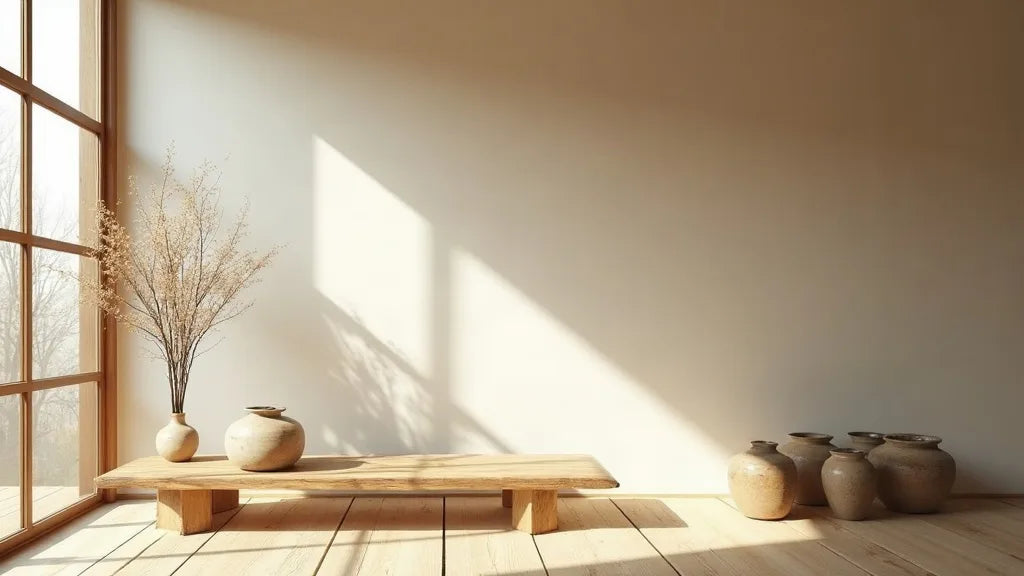
The first time I sat in a Kyoto machiya at seven in the morning, the room was almost empty. One low table, a clay pot, a stain on the floorboard where a kettle had lived for decades. Nothing matched, and nothing needed to. No, Japandi and wabi-sabi are not the same thing. Wabi-sabi is a Japanese aesthetic philosophy that finds beauty in imperfection, age and impermanence, while Japandi is a modern interior style that blends Scandinavian functionality with Japanese restraint. In practice, the japandi vs wabi sabi difference shows up in the room itself: a wabi-sabi room feels older, rougher and quieter; a Japandi room feels cleaner, tidier and more designed.
In short
- Wabi-sabi is a philosophy about imperfection and time; Japandi is a decorating style born from a Scandinavian-Japanese blend.
- Both use wood, stone, clay and linen, but wabi-sabi celebrates the marks and irregularities Japandi tends to smooth out.
- Japandi palettes stay muted and controlled; wabi-sabi palettes lean earthier, darker and more uneven.
- Choose Japandi for small, bright, rental-friendly flats, and wabi-sabi when you have texture, light and space to let objects age.
Japandi vs wabi-sabi: where each one comes from
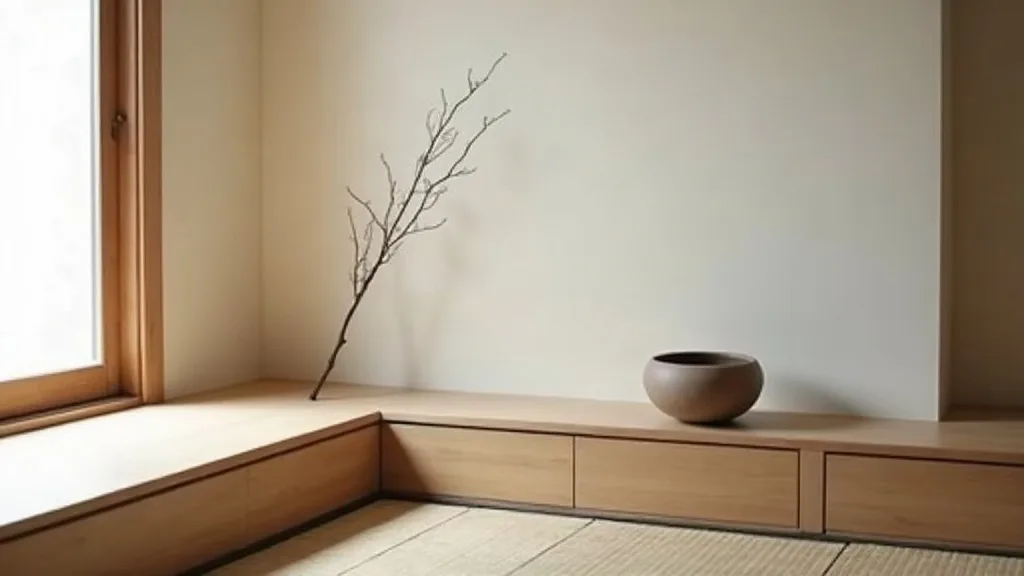
One is centuries old and has nothing to do with furniture. The other is recent vocabulary for arranging a living room. That gap explains the confusion online, where the two words are used as interchangeable labels for beige interiors.
Wabi-sabi as a Japanese aesthetic philosophy, not a trend
Wabi-sabi grew out of Japanese tea culture, where rough, locally made bowls were preferred to imported perfection. Wabi points to simplicity and quiet austerity. Sabi points to the beauty that age gives an object. Together they describe a way of looking, not a shopping list. A cracked glaze, a faded indigo cloth, a beam darkened by smoke: these are read as value, not damage.
Japandi as a Scandinavian and Japanese design meeting point
Japandi is a design style, and a young one. It joins Danish and Swedish functionalism, which prizes light wood, comfort and honest construction, with Japanese restraint, low horizons and empty surfaces. It is descriptive and practical: pale oak, muted textiles, closed storage, few objects on display, warm light.
Why the two get confused so often online
They overlap in appearance. Both favour natural materials, matte surfaces and calm colours. Search for either term and you get the same image: a pale room, a linen throw, a ceramic vessel. The confusion is understandable. The distinction is still real: wabi-sabi can live inside a Japandi room, but Japandi cannot contain everything wabi-sabi allows, because Japandi keeps order and wabi-sabi is willing to let it go.
How wabi-sabi and Japandi treat imperfection
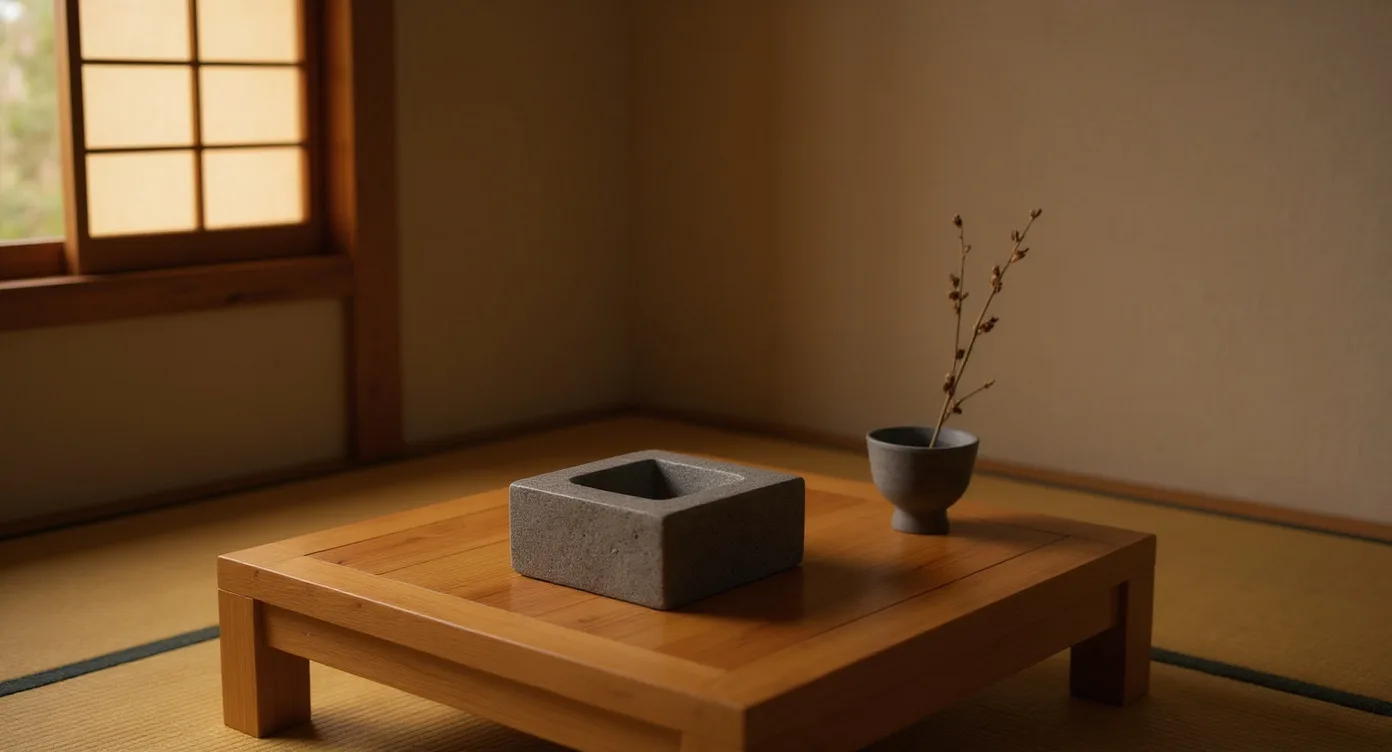
Here is the honest dividing line. Both styles respect handmade work. Only one of them puts the accident on the shelf at eye level.
The cracked, repaired and uneven in a wabi-sabi room
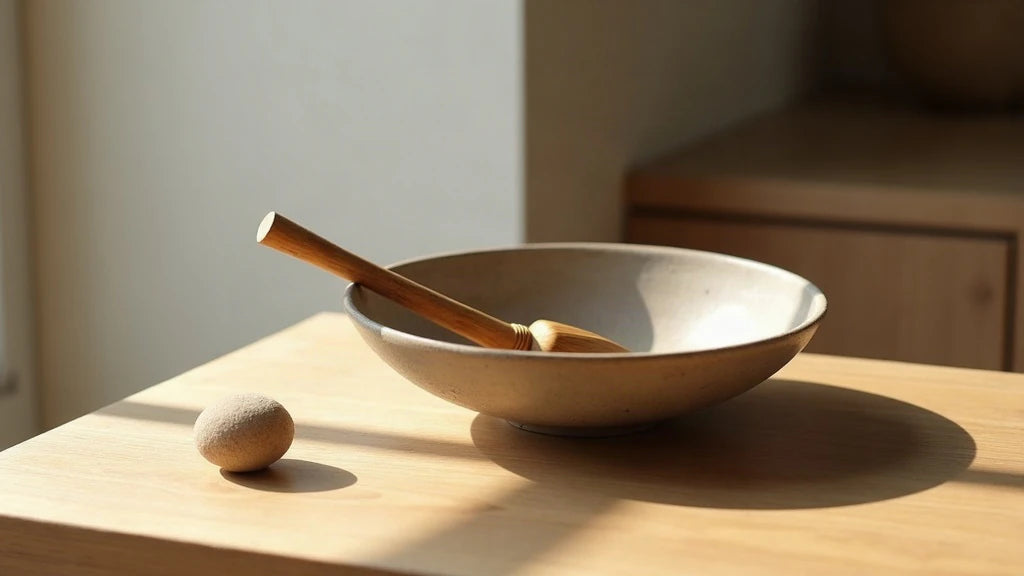
A wabi-sabi interior shows its process. A rim that dips on one side. A glaze that ran and pooled at the foot. A wooden bowl with the tool marks still readable. When I style a shelf in this register, I choose the piece with the flaw and turn it towards the light. The design vase with an uneven rim is the one I reach for most often when a room feels too resolved, because its silhouette refuses to be symmetrical and the eye slows down there.
Japandi's preference for clean lines and quiet order
Japandi accepts craft but prefers it tidy. The ceramic is handmade, yet the rim is even. The wood is solid oak, yet it is sanded smooth and finished with a matte oil. The linen is washed, yet the cushion is plumped. Nothing is glossy or broken, but nothing is broken either. Japandi rooms are calm because they are controlled, not because they are old.
Kintsugi, patina and what Japandi keeps of it
Kintsugi, the Japanese repair method that rejoins broken ceramics with lacquer dusted in gold or silver, sits squarely in wabi-sabi thinking: the repair is history made visible. Japandi borrows the idea more gently. It keeps patina on leather, grain on oak, slubs in linen. It rarely keeps the crack. If you want a shorthand, wabi-sabi accepts entropy, and Japandi keeps it at the door.
Palette and materials: Japandi tones vs wabi-sabi textures
Colour is where the two diverge fastest. Paint a sample board, stand it against the wall, and watch it across a full day. Raking afternoon light will show you more than any swatch card.

Japandi's muted greys, pale wood and soft contrast
Japandi palettes stay narrow: warm off-white, oat, greige, soft charcoal, and one darker anchor such as smoked oak or black metal. Contrast exists but stays gentle. Pale oak, ash and beech carry the warmth. Textiles are wool, cotton and washed linen in undyed tones. What breaks it: bright white gloss paint, lacquered surfaces, chrome.
Wabi-sabi's earth, clay and shadowed tones
A wabi-sabi palette runs deeper and less evenly. Think unbleached plaster, raw clay, ochre, ash grey, moss, faded indigo, and browns that shift from one pot to the next. Lime-washed walls suit it because they are never a single flat tone. Shadow is part of the scheme, not a fault to correct. These muted earth tones only work when the surfaces are matte, so light lands and stays instead of skidding off.
Linen, stone, paper and wood in both styles
The shared material list is short: stone, clay, wood, linen, paper. Washi paper diffuses lamp light into something even and soft. Travertine and unpolished stone bring weight to a light room. For a small, honest piece of raw stone on a shelf or by a bath, I keep coming back to the stone incense burner I use daily, because the pores catch shadow and it gives the surface a reason to be quiet. Texture layering is what stops either style from reading flat: one rough, one smooth, one woven, no more.

Japandi furniture vs wabi-sabi furniture in a real room
Furniture is where styling decisions become physical. Height, depth and spacing matter more than the label on the piece. In home staging I start with circulation, then proportion, then texture, in that order.
Low seating, floor cushions and tatami logic
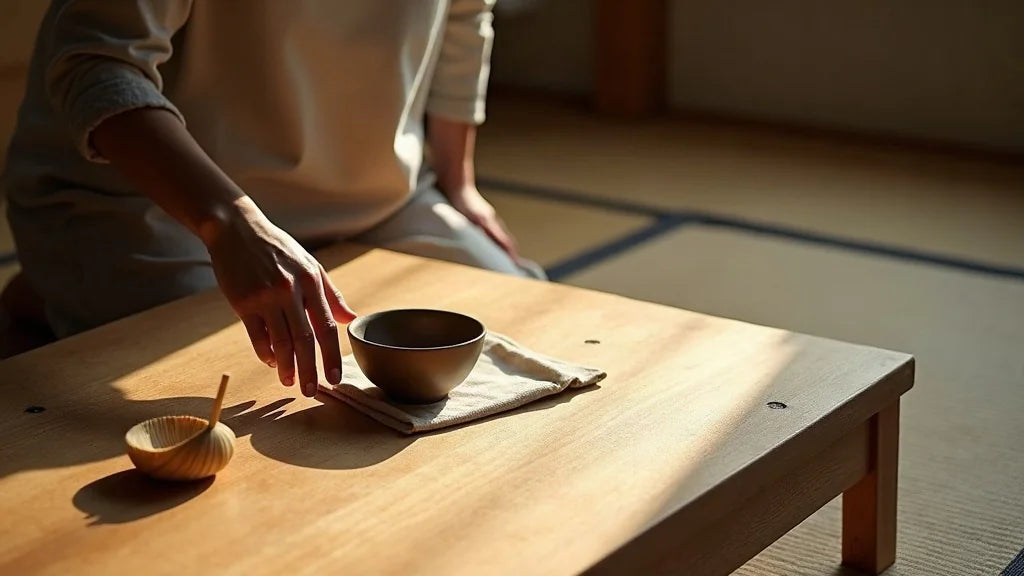
Wabi-sabi rooms sit low. Tatami living trained the eye to a horizon around knee height: low tables, floor cushions, benches instead of sideboards. Low-profile furniture makes ceilings feel taller and walls feel further away. Dropping seat height by a few centimetres does more than any mirror in a small room with decent light.
Chairs, benches and storage in a Japandi layout
Japandi lifts things back up to Scandinavian comfort. Chairs with a real backrest, a dining table at standard height, closed storage that hides the clutter a wabi-sabi room would simply not own. Legs are visible and slim, so the floor keeps running underneath. That single detail, floor visible under the furniture, is the most reliable Japandi move I know.
| Element | Wabi-sabi | Japandi |
|---|---|---|
| Seat height | Low, often floor level | Standard, comfort first |
| Storage | Open, sparse, few objects | Closed, organised, hidden |
| Finish | Raw, oiled, tool marks visible | Sanded smooth, matte oil |
Circulation, sightlines and empty space
Both styles depend on what you remove. Keep a clear path from door to window. Leave one wall unfurnished. Give each object breathing room on a shelf rather than lining them up. This is negative space used on purpose: emptiness that makes the remaining pieces legible. Fewer, better choices, and the room does the rest.
Japandi or wabi-sabi: which suits your home?
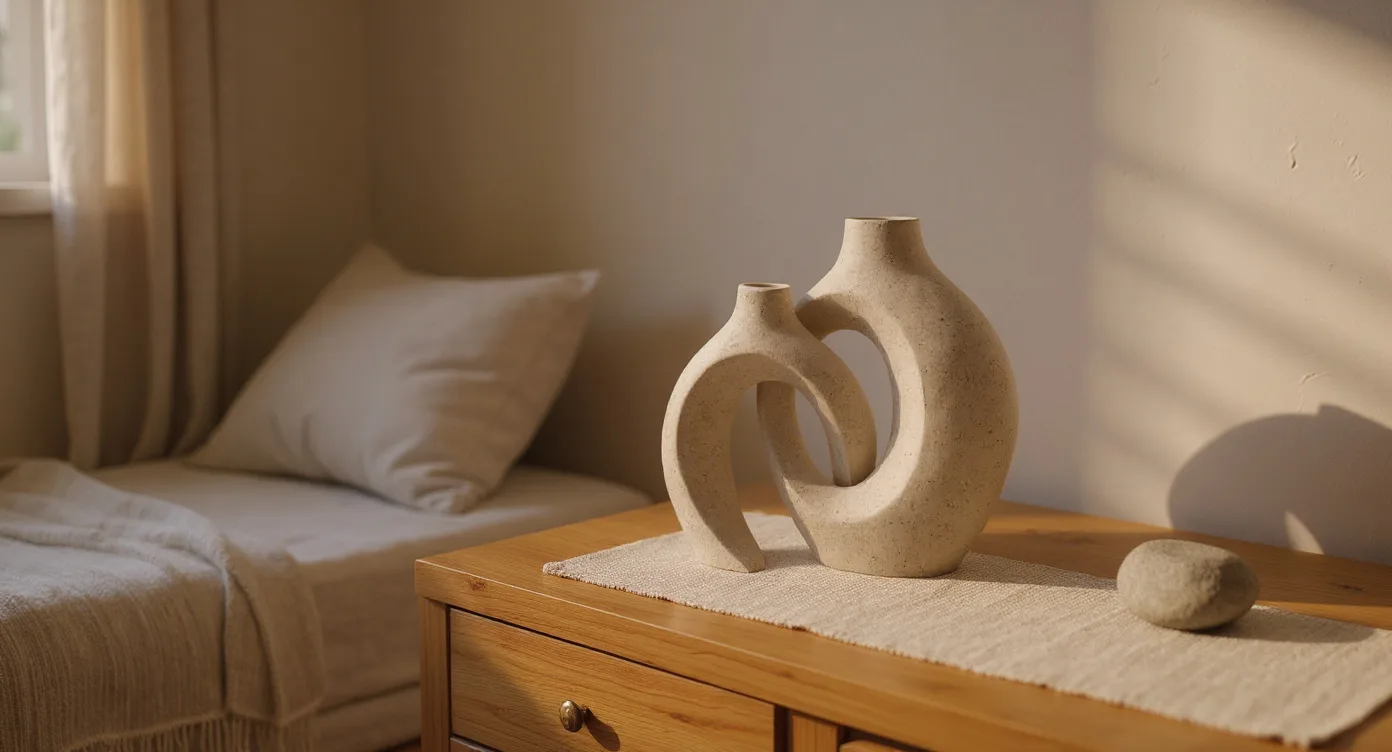
There is no winner here, only a fit. The building you live in has already voted. Look at your floor, your ceiling height and your light before deciding.
Small bright flats and rentals: the Japandi case
New-build walls, laminate or pale floors, limited storage, no permission to change surfaces: Japandi handles all of this well. It works with what is already smooth and even. For a studio or a bedroom being reworked, it gives order quickly and stages well before a sale.
Older homes with texture: the wabi-sabi case
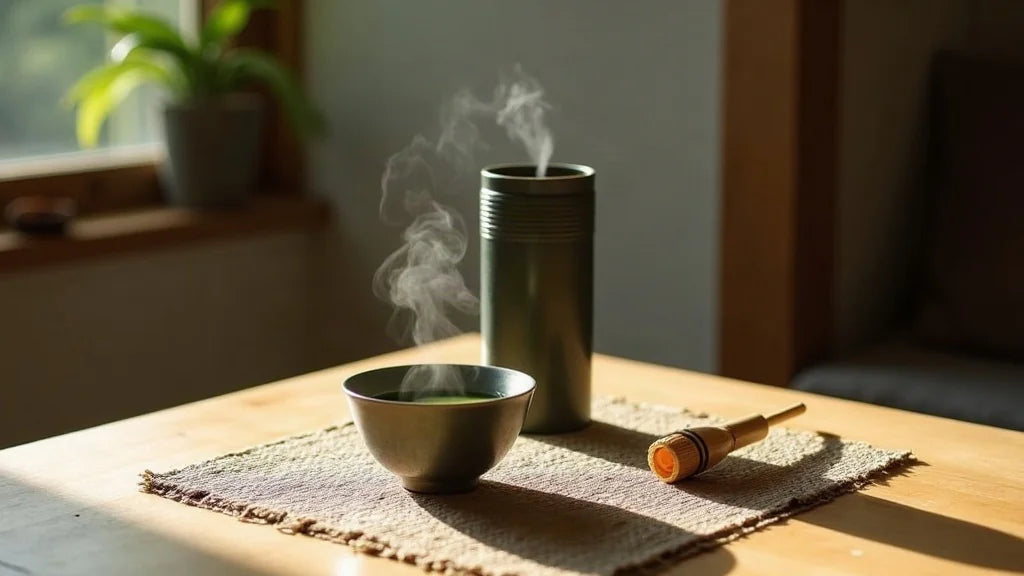
Uneven plaster, wide old boards, a beam, a chimney breast: these are already halfway there. Wabi-sabi rewards rooms with imperfections you cannot erase. It also suits a reading corner, where one chair, one lamp and one clay vessel are enough, and where a daily ritual, a bowl of matcha or a pot of sencha in the afternoon, becomes the reason the corner exists.
A side-by-side table of Japandi and wabi-sabi
The table below compares the two approaches across their essential qualities: origin, how they handle imperfection, colour, materials and the feeling they create in a room. Use it to recognise which direction your space leans, or where you might borrow from each.
| Wabi-sabi | Japandi | |
|---|---|---|
| Origin | Japanese aesthetic philosophy, rooted in tea culture | Modern style blending Scandinavian and Japanese design |
| Imperfection | Shown and valued, including repairs | Accepted in craft, smoothed in the finish |
| Palette | Earth, clay, ochre, indigo, deep shadow | Off-white, oat, greige, charcoal accent |
| Materials | Raw stone, unglazed clay, aged wood, paper | Pale oak, wool, washed linen, matte metal |
| Furniture | Low, sparse, benches and floor seating | Standard height, slim legs, closed storage |
| Effect in the room | Older, rougher, quieter | Cleaner, tidier, more designed |
| Budget logic | Few pieces, handmade, bought slowly | Coordinated set, easier to assemble at once |
| Upkeep | Let it age, dust, re-oil occasionally | Keep surfaces clear and clean |
Mixing is legitimate, and most of my clients end up there: a Japandi framework for the furniture and layout, one or two wabi-sabi objects allowed to be irregular. The frame gives order. The objects give life.
Japandi and wabi-sabi questions people ask most
These questions come up often from people deciding between the two approaches or trying to understand the difference more clearly. The answers here cut through the confusion and point toward what actually matters when you are making choices for a real room.
Are wabi-sabi and Japandi the same?
No. Wabi-sabi is a way of seeing that values age, asymmetry and impermanence. Japandi is a decorating style with recognisable furniture, colours and layouts. A room can be Japandi without being wabi-sabi, and a wabi-sabi room can ignore every Japandi convention.
What is the opposite of wabi-sabi?
Practically, the opposite is polished, symmetrical, mass-produced newness: gloss lacquer, perfect matching sets, surfaces designed never to show wear. In Japanese aesthetics, miyabi, the courtly ideal of refinement and polish, is often described as the counterpart to wabi's rustic simplicity.
What are the 7 principles of wabi-sabi?
The list usually cited comes from Zen aesthetics: kanso (simplicity), fukinsei (asymmetry), shibumi (understated beauty), shizen (naturalness without pretence), yugen (subtle depth), datsuzoku (freedom from convention) and seijaku (stillness). They are principles of perception rather than decorating rules. Read them as questions to ask about a room, not a checklist to tick.
What are the rules of a Japandi home?
Keep the palette to three or four muted tones. Choose one dominant wood and stay with it. Favour matte finishes, visible floor under the furniture and closed storage. Then leave a surface empty on purpose, because Scandinavian minimalism only reads as calm when something is missing.
Is Japandi still in style?
Japandi keeps appearing in new interiors because it solves practical problems: small rooms, limited storage, a need for calm. Both approaches here are ways of looking at a room, and rooms outlast the words used to describe them.
If you are shaping a room in either direction, the low tables, benches and quiet storage in our wabi sabi furniture collection are a calm place to start. Take one piece at a time, and let the room tell you what it still needs.
Explore the Wabi Sabi Furniture collection
Browse our furniture selection for low seating, stools and chairs in wood, stone and linen finishes.
Browse the collection →