

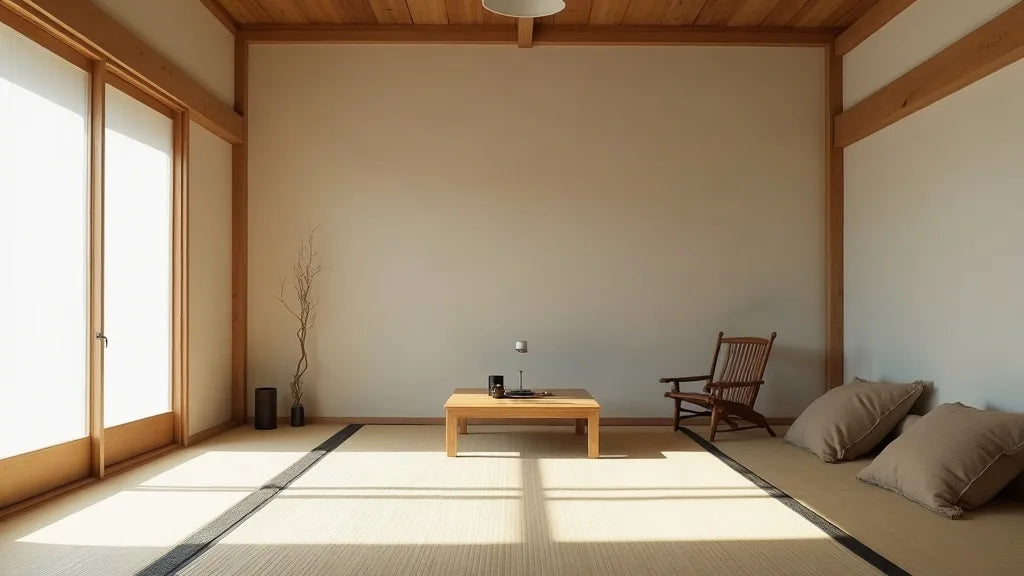
A cushion left flat on the floor for six months is not wabi-sabi. It is a flat cushion. I see that confusion in almost every home I style, and it is the reason most wabi sabi design mistakes are made with good intentions. The most common ones are five: mistaking neglect for patina, buying a whole room in one order, filling it with factory-distressed objects, drowning everything in the same beige, and calling clutter "authenticity". Wabi-sabi is not a look you install in a weekend. It is a slow editing practice built on honest materials, empty space and objects you actually use. Below, each mistake is paired with the concrete gesture that fixes it, from the stylist's side of the room.
In short
- Patina belongs to objects you care for; dust, sagging and breakage are just neglect.
- Buy one anchor piece, live with it for a season, then add, never a full room at once.
- Real aging comes from clay, stone, linen and wood, not from sanded-on factory wear.
- A neutral palette only works with layered texture, matte surfaces and one darker anchor tone.
What are common wabi-sabi design mistakes?
Wabi-sabi is the Japanese appreciation of things that are imperfect, modest and marked by time. Applied to a room, it asks for fewer objects, honest materials and space around them. The mistakes below all come from skipping one of those three conditions.
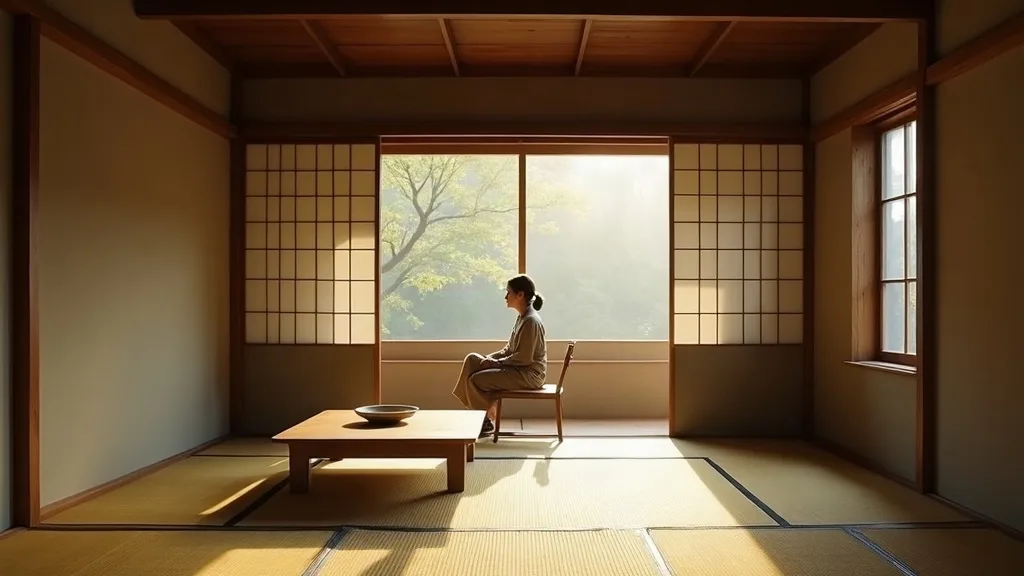
The five mistakes that flatten a wabi-sabi interior
- Neglect dressed as patina. Dust on the shelf, a chipped bowl never mended, a rug going grey at the door.
- The one-order room. Twelve items delivered the same week, all bought from the same set of photographs.
- Factory-distressed objects. Identical scuffs, painted-on "age", edges sanded in exactly the same place on every piece.
- Uniform beige. Walls, sofa, curtains and floor in one flat sand tone, with nothing to read against.
- Clutter called authenticity. A shelf of forty small objects, kept because each one has a story.
Why wabi-sabi design fails on restraint, not on taste
People rarely choose ugly objects. They choose too many, too fast, in the wrong scale. In home staging I start with three things before any object is placed: the circulation path, the sight lines from the doorway, and the proportion of the largest piece to the wall behind it. If the path narrows to under about 70 centimetres, or the eye hits three competing objects from the door, no amount of linen and clay will calm the room. Restraint is a measurement problem before it is an aesthetic one.
Wabi-sabi or simply neglected? Where the line falls
The line is care. Age that comes from use and maintenance reads as depth. Age that comes from being forgotten reads as a room nobody looks after. The materials can be identical; the difference is whether a hand has been on them recently.
Patina vs damage in a wabi-sabi interior
Oiled oak that has darkened around a drawer pull is patina. Oak going grey and fuzzy because it was never oiled is damage. Washed linen that has softened and creased is patina. A cushion cover with a permanent body-shaped dent and a ring of hand grease is damage. An irregular glaze pooling at the foot of a bowl is patina. A crack you keep meaning to deal with is damage. The test I use: could you describe the mark as the result of something you did on purpose, repeatedly? If yes, keep it.
Keeping a wabi-sabi room clean without making it sterile
A short weekly pass is enough. Clear every horizontal surface completely. Dust and wipe. Put back only what earns its place. Shake and rotate textiles, oil any wood that has gone chalky. Ten minutes per room, and the space stops sliding.
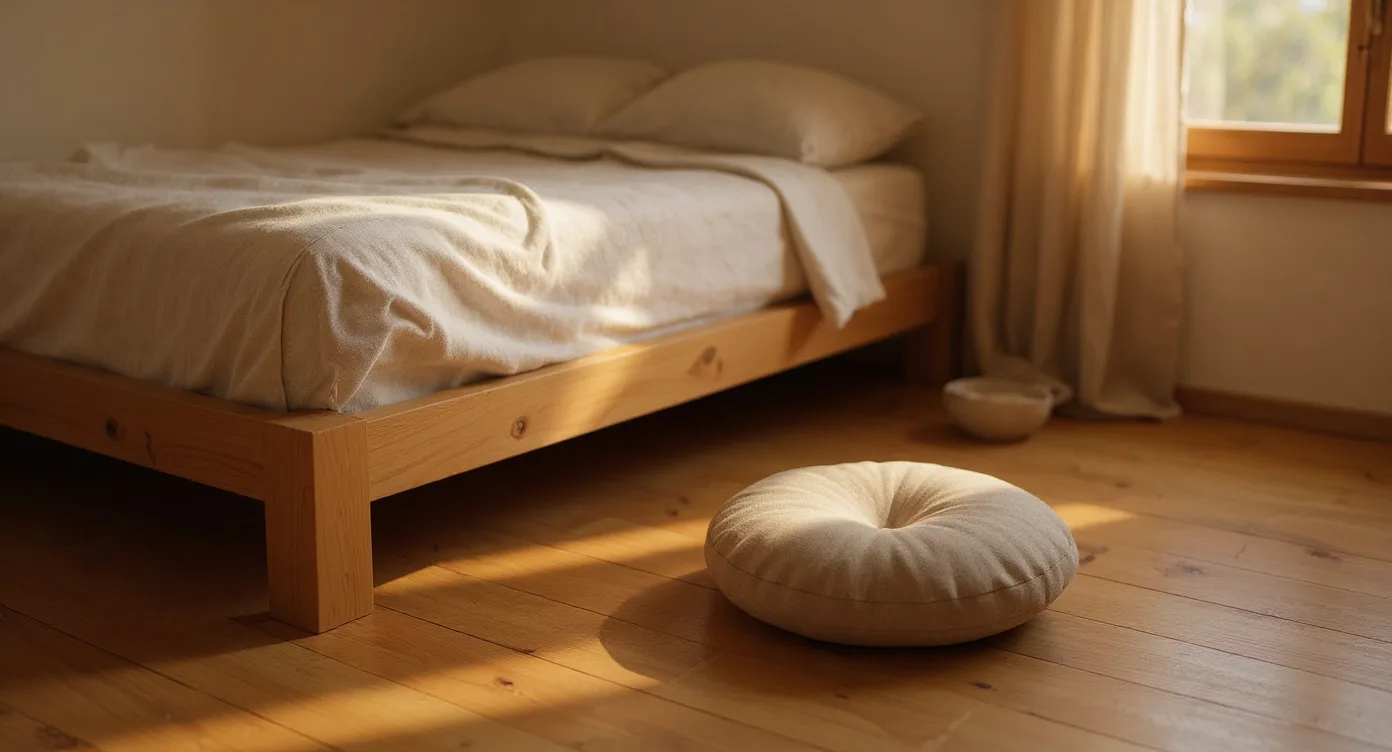
Low seating shows this best. A floor cushion is either maintained or it is a heap. I keep recommending a Japanese sitting cushion in a natural fibre cover for reading corners, because it can be beaten, aired and washed, and it comes back with its shape. That is the difference between comfort that is tended and comfort that has given up.
Buying a whole wabi-sabi interior in one order
A room bought in one order looks bought. Everything arrives at the same stage of newness, in one supplier's colour range, with no gaps. Wabi-sabi interiors read as slow because they were slow. You can compress the timeline, but not to a weekend.

Start a wabi-sabi room with one anchor piece
Choose the largest, most-used object first: the table, the bed, the low sideboard. Get its proportion right against the wall and the window, and get its material honest. Then live with it through one season. Daylight changes across three months, and a pale oak top that looked warm in autumn can read yellow in June. Only after that do you add the second layer. One anchor piece chosen well saves four small purchases made to compensate.
Empty space in a wabi-sabi layout is not a gap to fill
Negative space is a decision, not a leftover. In practice it means keeping one wall bare, leaving a clear stretch of floor in the sight line from the door, and giving each object breathing room on a surface. In traditional rooms, the tokonoma alcove holds one scroll and one arrangement, and the emptiness around them is the point. Copy the ratio, not the alcove.
Editing a wabi-sabi shelf down to what you use
Take everything off. Sort into three piles: used in the last month, genuinely loved, and neither. The third pile goes out of sight. From the first two, put back no more than five items per metre of shelf, in uneven groupings, at different heights. A shelf you rotate stays alive; a shelf you fill stays full.
Factory-distressed or honestly aged wabi-sabi objects?
Industrial "aging" is repetition. A machine cannot vary, so it repeats the same scuff, the same rubbed corner, the same crackle across a whole production run. Real wear varies because the hand and the kiln vary. Once you know what to look at, the difference takes three seconds.
How to spot fake wear on a wabi-sabi vase or bowl
| What you see | Factory-distressed | Honestly aged or handmade |
|---|---|---|
| Surface marks | Same scuff in the same spot on every unit | Marks fall where the object was held, turned or set down |
| Colour | Dark tint sprayed into recesses, sitting on top of the finish | Glaze pools and thins with the form, tone shifts piece to piece |
| Edges | Sanded evenly, exposing a different material underneath | Slightly uneven rim, throwing rings or hand-formed asymmetry |
| Weight and base | Uniform, light, perfectly flat foot | Small weight differences, unglazed foot showing the raw clay |
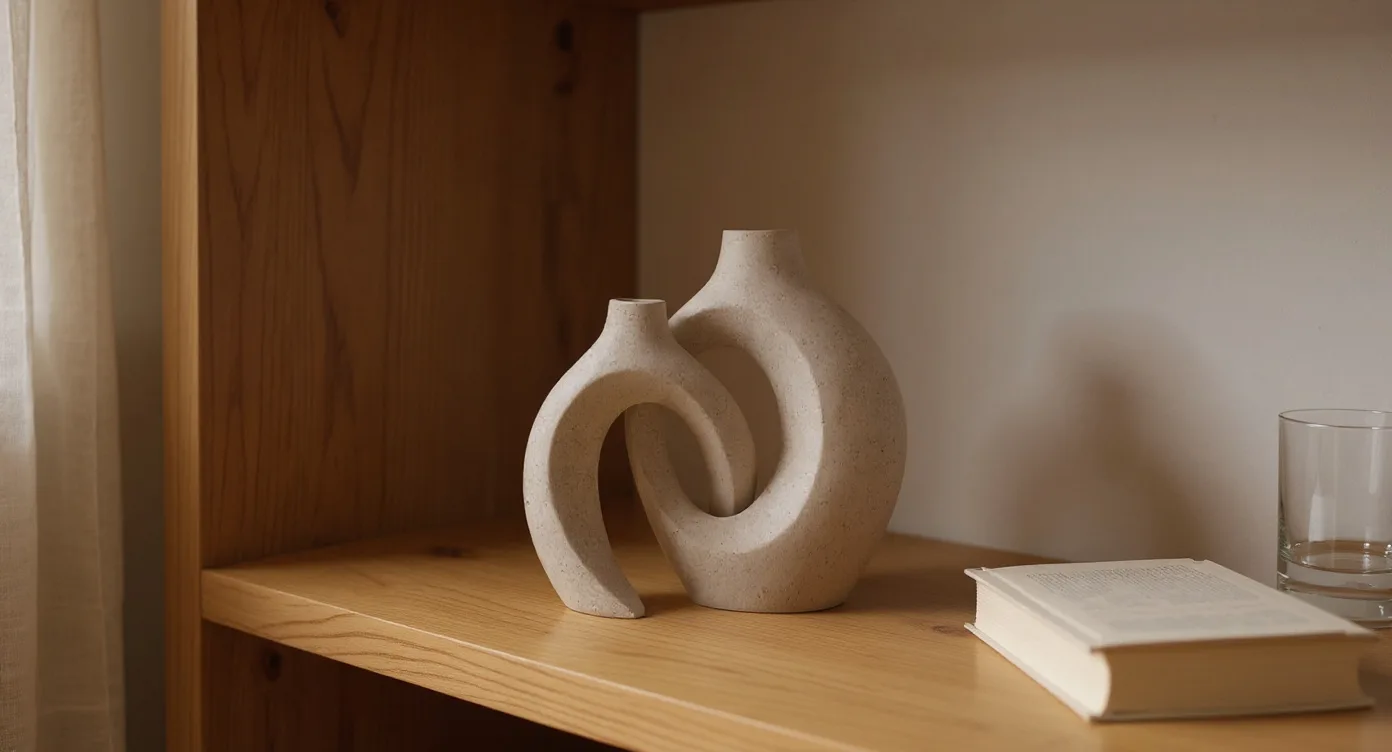
The base tells the truth fastest. Turn the piece over. On unglazed ceramic feet you see the actual body of the clay, its grain and colour, and often the faint spiral left by the wheel. I point people toward a sculptural wabi-sabi vase when they want one irregular object to set the tone: the variation sits in the form and the glaze, not in a printed effect. Each piece goes through three workshop checks before shipping, and what we look for is exactly this, honest variation and no cosmetic damage.

Clay, stone, linen and wood that age on their own
Some materials do the work for you. Raw linen softens and creases with every wash. Untreated or oil-finished wood darkens where hands rest. Travertine and limestone hold open pores that catch light and dust in a way that deepens over years. Handmade pottery collects tiny use marks around the rim. Buy these, use them daily, and you never need to buy age.
Why an all-beige wabi-sabi room feels flat
Beige is not the problem. A single beige is. When wall, curtain, sofa and rug share one tone at one sheen, the eye finds nothing to hold and the room goes dull. Calm needs variation, just quiet variation.
Layering texture in a neutral palette
Keep the colour range narrow and widen the grain instead. Crumpled linen next to smooth plaster. Rough stone next to pale oak. Washi paper next to unglazed clay. Rattan next to a limewashed wall. This is texture layering, and it does the job colour would do in a louder scheme.
Shadow and matte surfaces: contrast without loud color
Matte finishes absorb light and hold shadow; gloss bounces it back and erases the surface. Keep walls, ceramics and wood matte or low sheen, then light them from the side rather than straight down. A floor lamp, a table lamp and a paper shade at seated eye level will show the weave of a cushion that a ceiling fitting flattens completely. Raking light is what makes a quiet palette legible.
Where a wabi-sabi room needs one darker anchor tone
Add one deep value and stop. Dark stained wood, charcoal stone, an ink-toned vessel, a black iron kettle. Roughly one darker element for every three light ones is enough to give the eye a floor to stand on. Without it, the room reads as unfinished rather than serene.
Wabi-sabi design questions people ask most
These come up in almost every consultation, so here are the short answers.
Is wabi-sabi good or bad for a home?
It is good when it helps you own less and care for what remains: it favours repair, natural materials and space over accumulation. It turns bad when it becomes an excuse, either for leaving a room untended or for buying a pile of rustic objects on impulse. The philosophy asks for attention. If it is making you less attentive to your home, it is being used wrongly.
What is the 3-5-7 rule in decorating?
It is the habit of grouping objects in odd numbers, threes, fives or sevens, because an odd group reads as a composition while an even one reads as a pair. On a shelf or a table, vary height and mass within the group. A single well-placed object often beats any grouping.
What is the 70/30 rule in decorating?
Roughly 70 per cent of a room follows one dominant direction, in colour, material or style, and 30 per cent provides contrast. In a japandi interior, the Japanese-Scandinavian bridge of pale wood and quiet forms, that often means 70 per cent neutral naturals and 30 per cent darker tone and rougher texture. It keeps a scheme coherent without monotony.
Does a wabi-sabi room have to be beige?
No. The palette follows the materials, and materials give you clay reds, ash greys, indigo, moss, ink and warm browns. Indigo-dyed textiles have been part of Japanese homes for centuries and sit perfectly in this approach. What matters is muted saturation and matte surfaces, not the beige itself.
Can wabi-sabi work in a small rented apartment?
It works especially well there, because the method is subtraction. Clear the floor along the main path, keep one surface empty, choose fewer and better pieces, and add soft lamps at low level instead of relying on the ceiling fitting. Textiles, ceramics and lighting travel with you and change a rental more than any fixed work would.
If you want to start with one honest piece rather than a full order, take a slow look through our wabi-sabi home decor collection and choose the single object your room is actually missing.
Explore the Wabi Sabi Home Decor collection
Browse the home decor collection for clay, stone and linen pieces you can add one at a time.
Browse the collection →